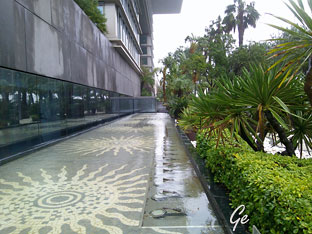

Portugal's government is
extending a state of emergency until the end
of next week as it says it is facing a "devastating
crisis" caused by a
wave of storms that have killed several people in
recent weeks.
Previous Storm Kristin
left a trail of destruction in the central
region of Leiria, killing at least six people,
according to local authorities.
The National Civil Protection Authority has now also
ordered the
evacuation of municipalities along the Tagus river,
which flows into the
Atlantic Ocean near Lisbon.
Portugal
extends state of emergency amid destruction brought
by Storm Leonardo (15. mars
2026)
Avreise med Vista og Air Portugal til
Lisboa og videre til Estoril.
Kraftig forsinka pga is på porten til lasterom.
Fin motagelse på hotellet, Hotel Londres,
med tapas og drikkevarer.
in the civil parish of Cascais e Estoril of the Portuguese
Municipality of Cascais, on the Portuguese Riviera.
It is a popular tourist destination known for its hotels,
beaches, and the Casino Estoril, and has historically
been home to numerous royal families and celebrities.
The town has also hosted high-profile events, including
the Estoril Open and the Lisbon & Estoril Film Festival.
Estoril - Wikipedia (11. mars 2026)
Vi startet dagen med en liten tur i Estoril
sammen med reiseleder Torill og resten av gruppa.
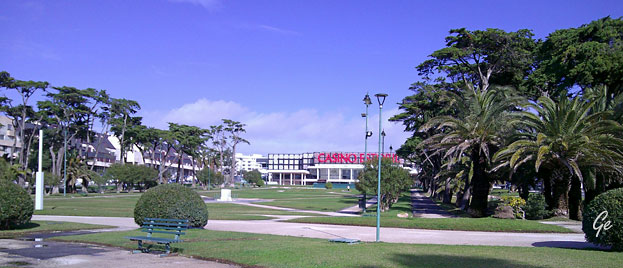
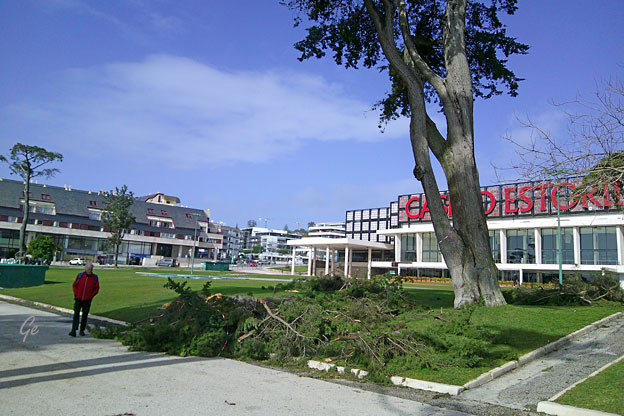
Casino og parken nedenfor
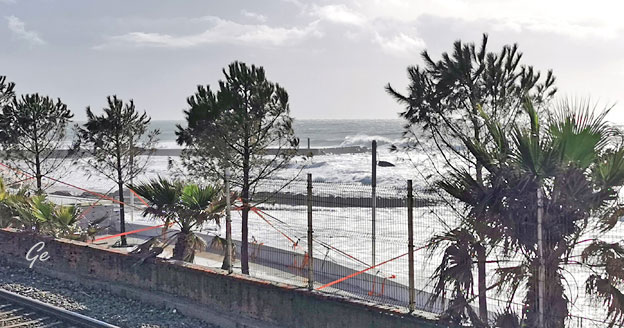
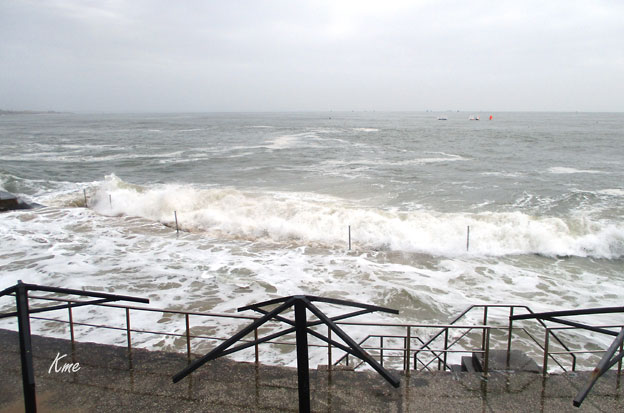
De var vind og store bølger.
De er visst vant til det her nede, trærne var godt tjora.
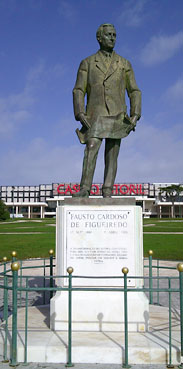
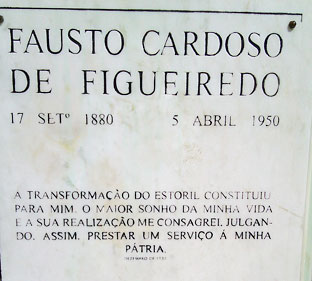
The first stone was laid on 16 January 1916 by then-President
Dr. Bernardino Machado, a venture of Fausto Figueiredo.
During the Second World War, it was reputed to be a gathering point for spies, dispossessed royals, and wartime adventurers; it became an inspiration for Ian Fleming's James Bond 007 novel Casino Royale.
Casino Estoril - Wikipedia (11. mars 2026)
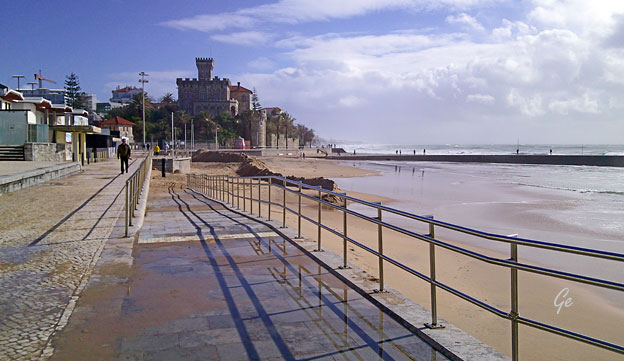
Etterpå gikk vi en tur på egen hånd. Først ned til strandpromenaden.
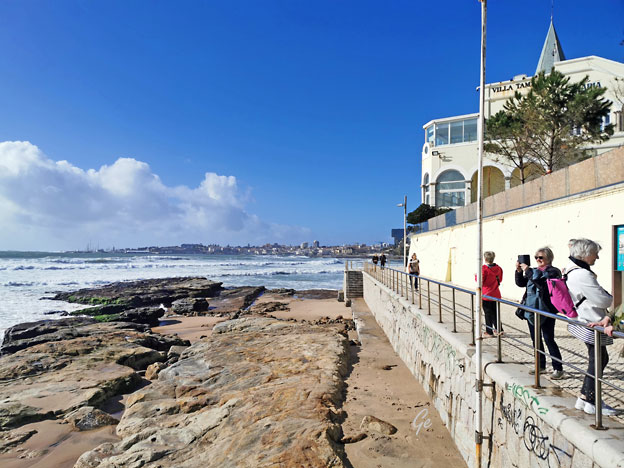
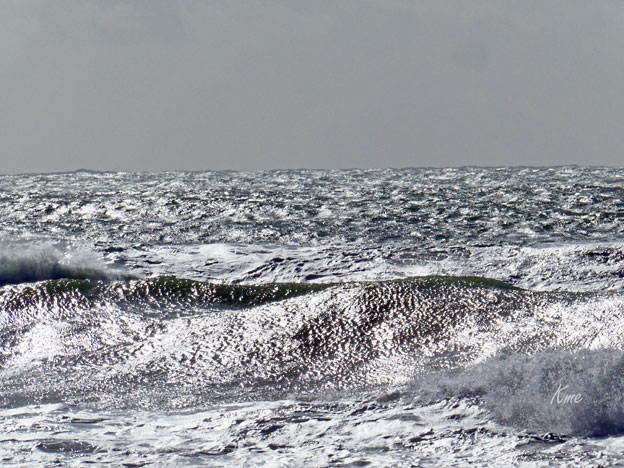
| Etter
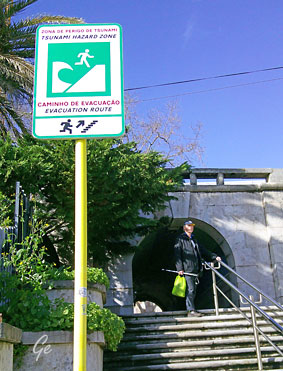
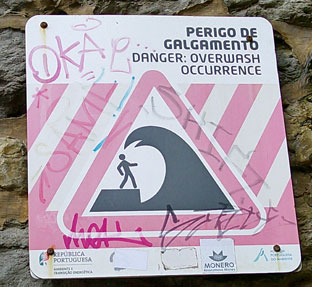
å ha gått et stykke langs kyststien, gikk vi oppover i byen, i retning Monte. Vi fulgte en evakueringsrute for Tsunami. |
 |
| På
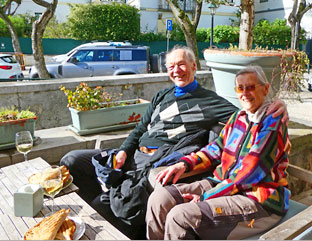
veien spiste vi lunsj på en restaurant i en park. Fint vær da vi kom, så vi valgte å sitte ute. |
 |
.
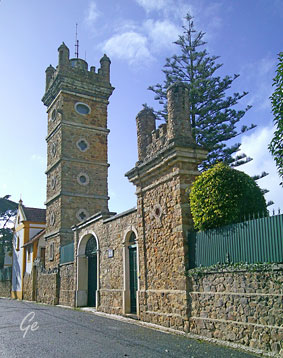 |
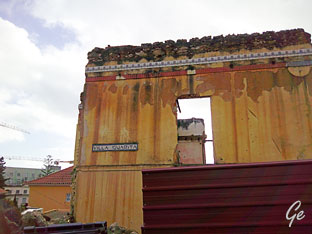 Fine hus og falleferdige hus side om side. |
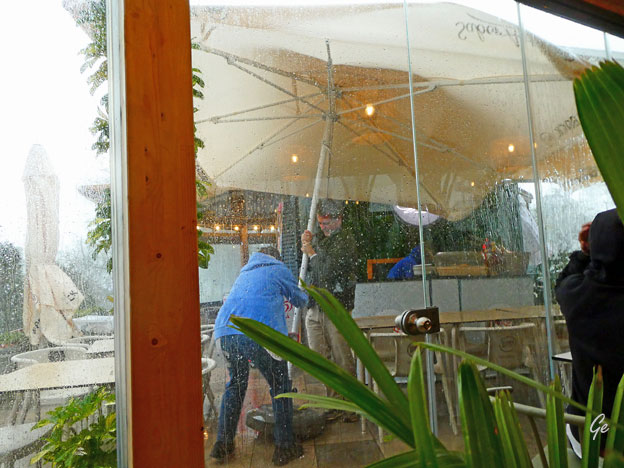
Men det tok ikke lang tid før regnet og vinden var tilbake.
Så vi måtte flytte inn.
Vi ble sittende en stund før regnet ga seg, så fortsatte vi oppover mot Monte
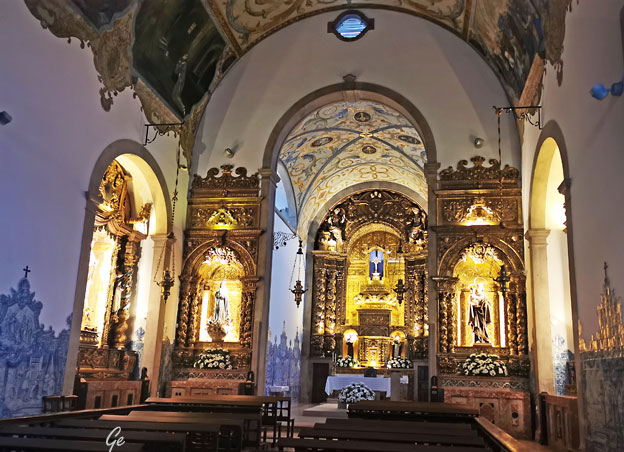
The Church of Saint Antonie, Estoril
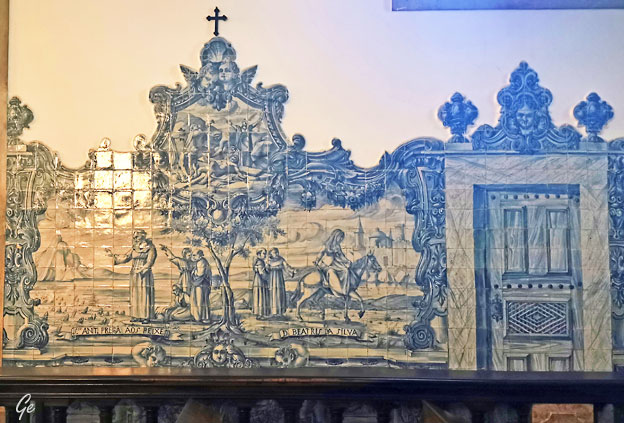
The church of Saint Anthony, or mother church of Estoril, was built in 1527 in a place where there was a hermitage dedicated to Saint Roque. This church went through several calamities, including the earthquake in 1755 and a big fire in 1927 but it was immediately recovered in both times. A special note to the baroque fronton and, inside, the tile panels with motives of the life and miracles of Saint Anthony.
Igreja de Santo António - Cascais | All About Portugal (11. mars 2026)
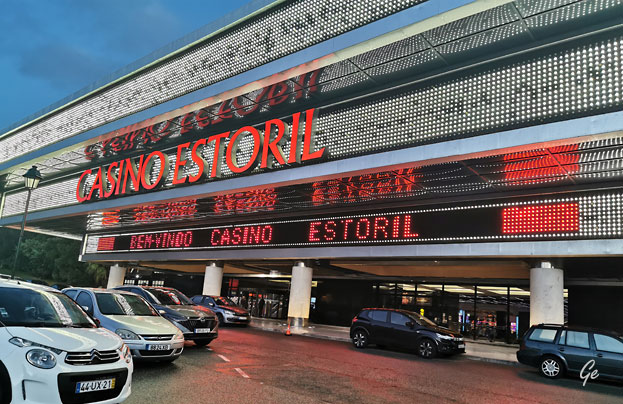
En kveldstur forbi Casino
Natt til onsdag herja ekstremværet Kristin
Storm Kristin was a compact, catastrophic and record-breaking
extratropical cyclone that severely impacted Portugal, as well as
parts of the Mediterranean and Southeastern Europe in late
January 2026. Storm Kristin was the twenty-sixth storm of the
2025-26 European windstorm season, and the eleventh to be
named by the south-western naming group, which consists of
France, Spain, Portugal, Belgium, and Luxembourg. Kristin was
named by the IPMA on 27 January, as a significant impact was
forecasted. The impact of Kristin and its successors was
described as a humanitarian crisis by a researcher in extreme
weather and climate change.
Storm Kristin - Wikipedia 11. mars 2026
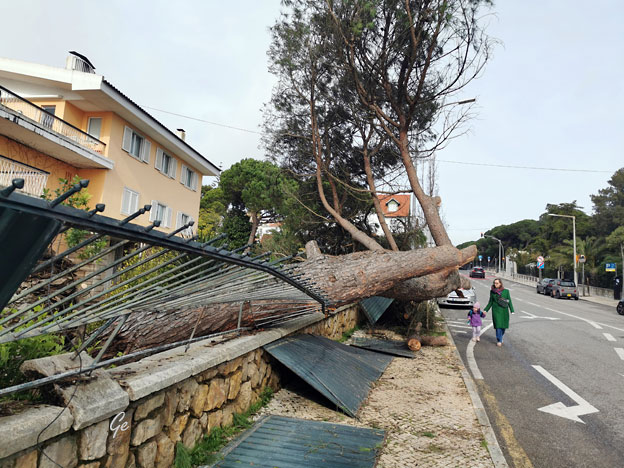
Velta tre rett nedenfor hotellet vi bodde på.
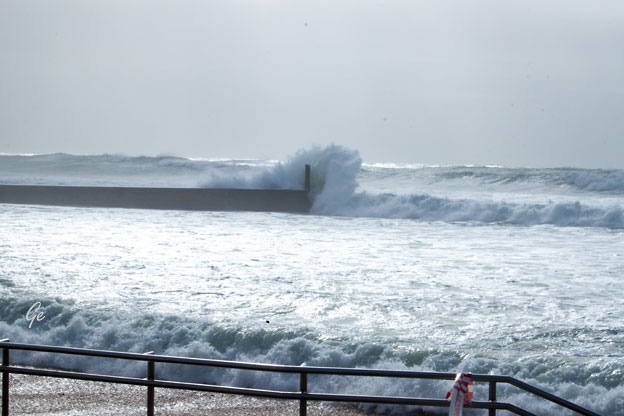
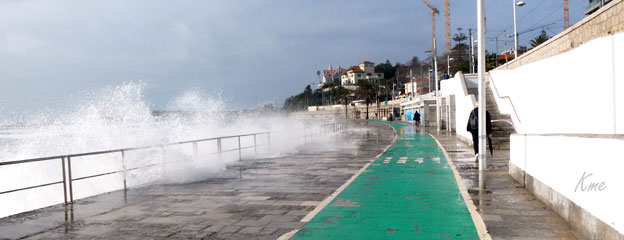
Vi gikk inn til Cascais, en strekning på litt over 2 km å gå.
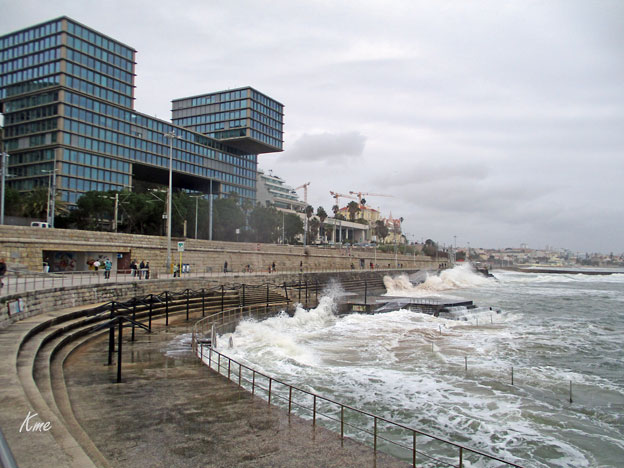
Strandpromenaden var stengt, men folk gikk der likevel.
Grunnen til stengingen var at bølgene førte med seg til
dels ganske store steiner som ble kasta på land.
Vi gikk et stykke vi også,
men den siste delen av veien inn til Cascais gikk vi
langs trafikkert bilvei
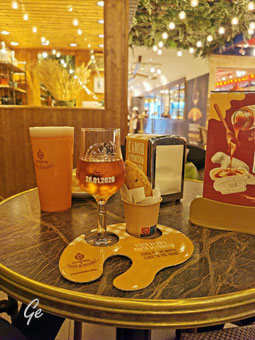 |
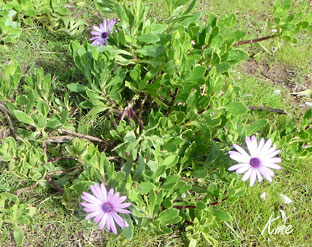 Noen vårtegn var det, selv om stormen herja. Til venstre: Bacalaoboller og portvin i Cascais |
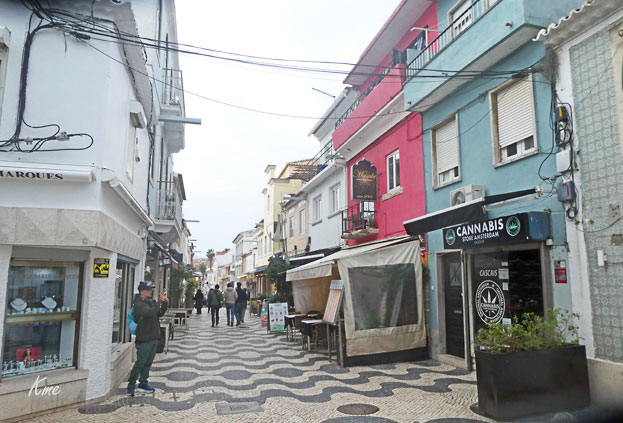
Gågate i Cascais
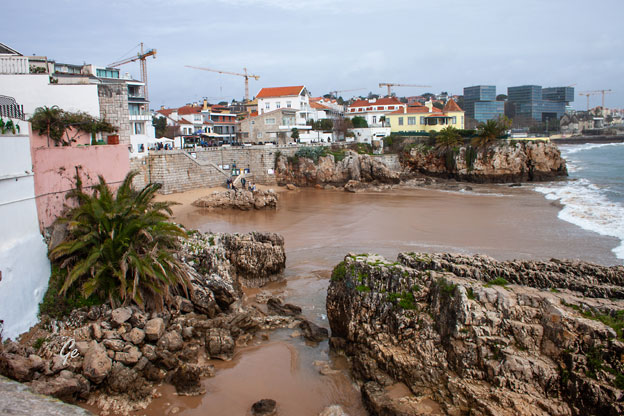
Cascais
Cascais (European Portuguese pronunciation: [kɐʃˈkajʃ] ) is a town and municipality in the Lisbon District of Portugal, located on the Estoril Coast.
The municipality has a total of 214,158 inhabitants in an area of 97.40 km2.
Cascais is an important tourist destination. Its marina hosts events such as the America's Cup and the town of Estoril, part of the Cascais municipality,
hosts conferences such as the Horasis Global Meeting.
Since the 1870s, Cascais has been a popular seaside resort after King Luís I
of Portugal and the Portuguese royal family made the seaside town their
residence every September, thus also attracting members of the Portuguese
nobility, who established a summer community there. Cascais is known for
the many members of royalty who have lived there, including
King Edward VIII of the United Kingdom, when he was the Duke of Windsor, King Juan Carlos I of Spain, and King Umberto II of Italy. Former Cuban president Fulgencio Batista was also once a resident of the municipality.
The Casino Estoril inspired Ian Fleming's first James Bond novel,
Casino Royale.
Cascais - Wikipedia (11. mars 2026)
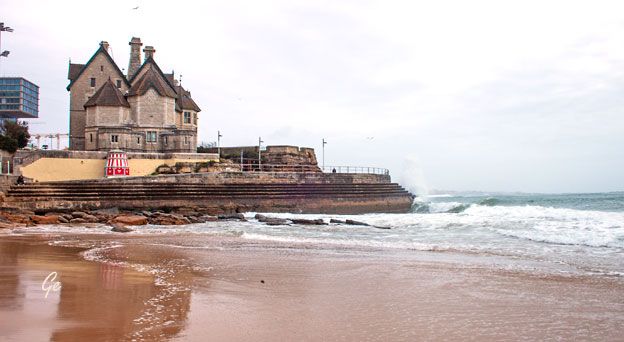
Da vi skulle tilbake var kyststien åpen igjen,
så vi slapp å gå langs bilveien.
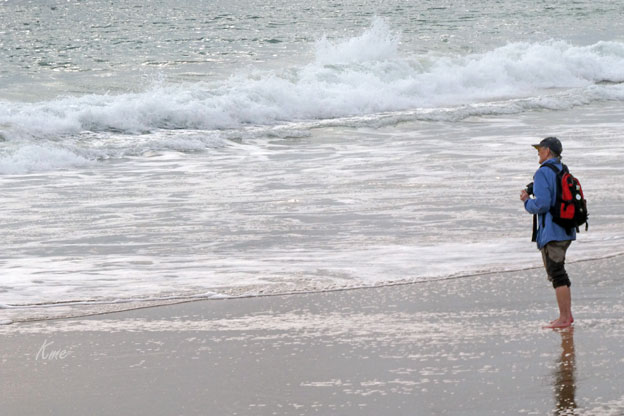
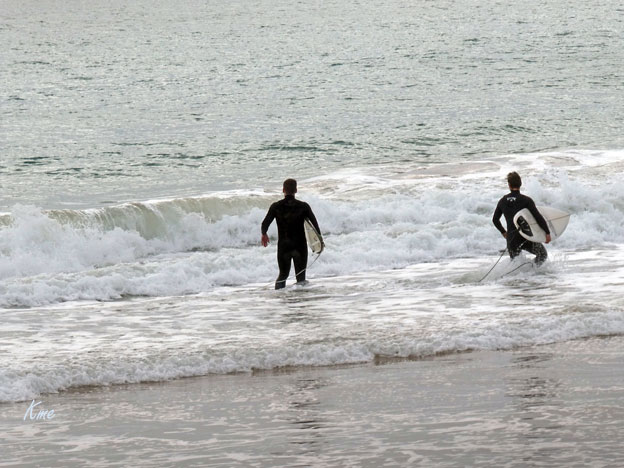
Noen trives best i bølgene
I dag skulle hele gruppa først til Belem og så inn til Lisboa.
Det regna om formiddagen,
men heldigvis ble det opphold før vi kom inn til Lisboa.
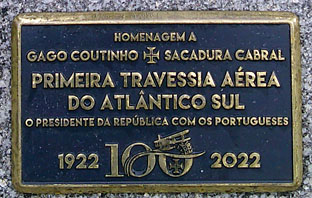
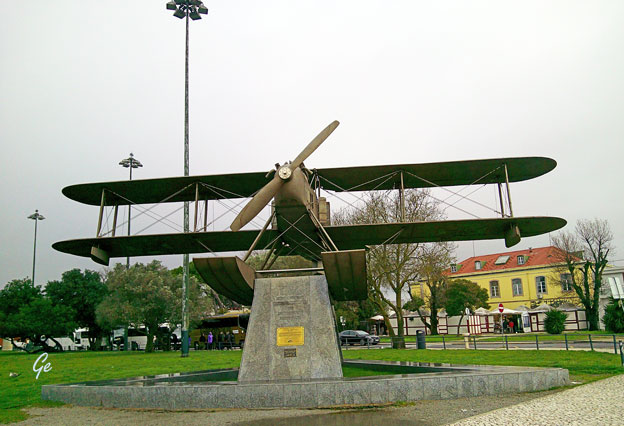
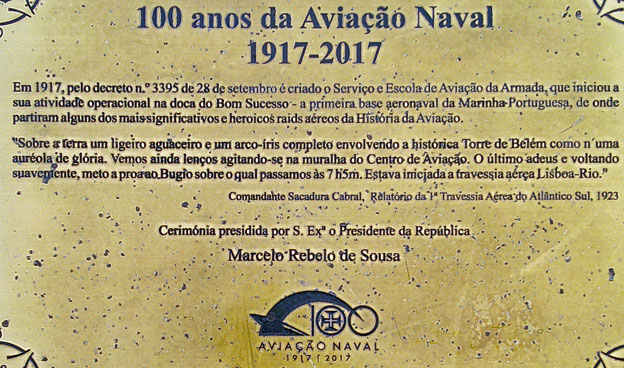
Flymodell i Belem
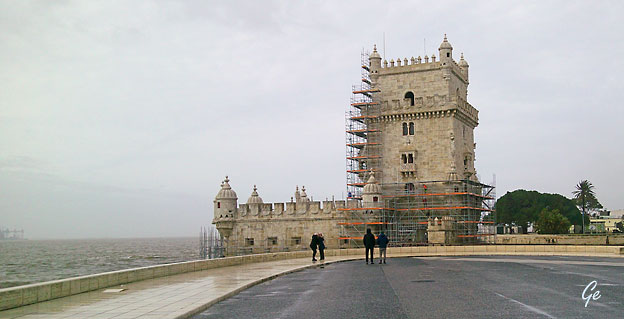
fortification located in Lisbon that served as a point of
embarkation anddisembarkation for Portuguese explorers
and as a ceremonial gateway to Lisbon.
It was built during the height of the Portuguese Renaissance,
and is a prominent example of the Portuguese Manueline style,
but it also incorporates hints of other architectural styles.
The structure was built from lioz limestone and iscomposed
of a bastion and a 30-metre (98.4 ft), four-storey tower.
Belém Tower - Wikipedia
Vi var i Belem i 2001 da kom vi opp i tårnet,
nå var det stengt pga oppussing
 |
The South
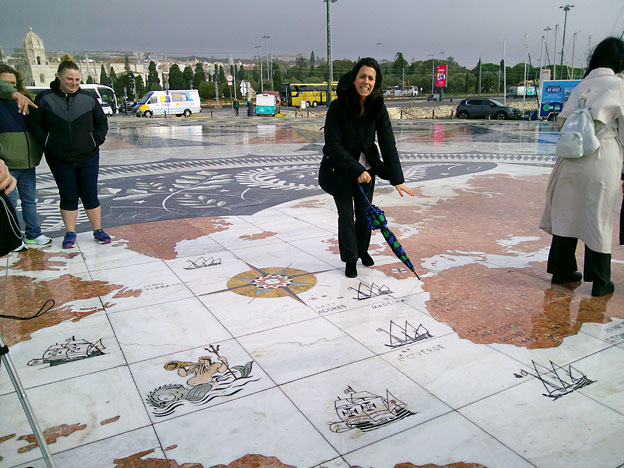
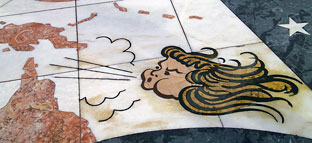
African government was responsible for gifting the construction of the square in front of the monument: the 50-metre-diameter (160 ft) Rosa-dos-Ventos (compass rose) was executed using different types |
Lisbon, more specifically in Sintra. Designed by the architect Cristino da Silva,
it includes a Mappa mundi that is 14 metres wide, showing the routes of Portuguese carracks and caravels during the Age of Discovery.
Monument of the Discoveries - Wikipedia (11. mars 2026)
Belém (locally [bɨˈlɐ̃j]) is a freguesia (civil parish) and district of Lisbon,
the capital of Portugal. Belém is located in western Lisbon, to the west of Ajuda and Alcântara and directly east of Lisbon's border with Oeiras.
Belém is famous as a museum district, as the home of many of the most
notable monuments of Lisbon and Portugal alike, such as the Belém Tower, the Jerónimos Monastery, the Padrão dos Descobrimentos, and Belém Palace (official residence of the President of Portugal). The population in
2011 was 16,528
Belém, Lisbon - Wikipedia (11. mar 2026)
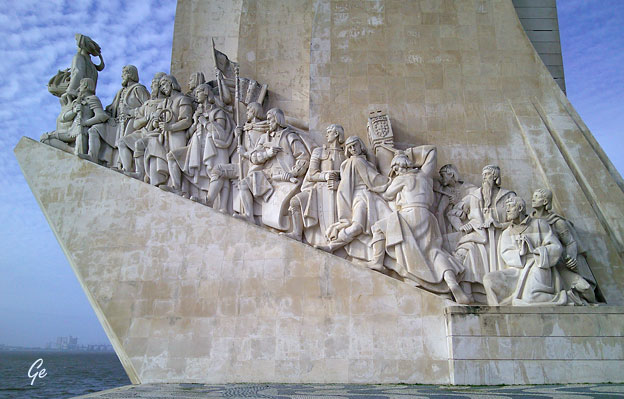
The Monument of the Discoveries (Portuguese: Padrão dos Descobrimentos, Portuguese pronunciation: [pɐˈðɾɐ̃w duʒ ðɨʃkuβɾiˈmẽtuʃ])
is a monument on the northern bank of the Tagus River estuary, in the civil
parish of Santa Maria de Belém, Lisbon. Located along the river where ships departed to explore and trade with India and the Orient, the monument
celebrates the Portuguese Age of Discovery (or "Age of Exploration") during
the 15th and 16th centuries
The monument was conceived in 1939 by Portuguese architect José Ângelo
Cottinelli Telmo, and sculptor Leopoldo de Almeida, as a temporary beacon
during the Portuguese World Exhibition opening in June 1940.
The Monument to the Discoveries represented a romanticized idealization
of the Portuguese exploration that was typical of the Estado Novo regime
of António de Oliveira Salazar. It was originally constructed as a temporary construction, located in the Praça do Império as part of an urban renewal
project favoured by minister Duarte Pacheco, but with the resistance of
Cottinelli Telmo. Yet, by June 1943, the original structure was demolished
after the exposition as there was no concrete formalization of the project.
Monument of the Discoveries - Wikipedia (11. mar 2026)
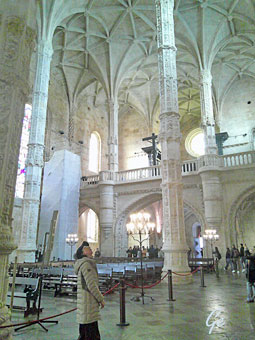 |
Completion of the Church (1541): The church is completed after 40 years of work. It is the most important component of the monastery, devoted to St. Mary of Belém. Earthquake Damage (1755): The church and the monastery sustained substantial damage as a result of the Great Lisbon earthquake in 1755. During the Napoleonic Wars, French troops used the monastery as a barrack. Jeronimos Monastery | Witness City's Most Iconic Landmark (11. mars 2026) |
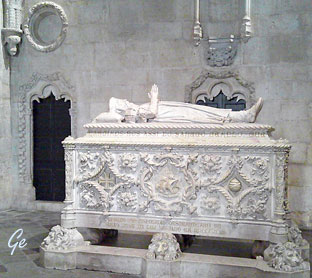 |
The Tomb of Vasco da Gama in
Jerónimos Monastery commemorates the historic journey of the legendary Portuguese explorer to India. As the first European to reach India by sea and connect Europe to Asia, the tomb of Vasco da Gama was created in the chancel of the church. This ornate stone tomb adorned within the lower choir not only serves as a final resting place of Vasco da Gama but also invites you to delve into the life and achievements of this influential figure who shaped the place of Portugal on the world map. Jeronimos Monastery | Witness City's Most Iconic Landmark (11. mars 2026)
|
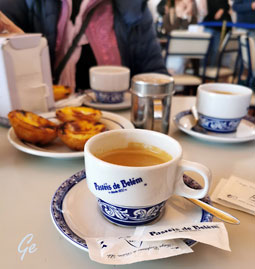 |
Pastais
de Belem In 1837 we began making the original Pastéis de Belém®, following an ancient recipe from the Mosteiro dos Jerónimos. That secret recipe is recreated every day in our bakery, by hand, using only traditional methods. Even today, the Pastéis de Belém® offer the unique flavour of time-honoured Portuguese sweet making. Home | Pastéis de Belém® (11. mars 2026) |
capital city (second overall after Reykjavík), and the only one along the Atlantic coast, the others (Reykjavík and Dublin) being on islands. The city lies in the
western portion of the Iberian Peninsula, on the northern shore of the River
Tagus. The western portion of its metro area, the Portuguese Riviera, hosts the westernmost point of Continental Europe, culminating at Cabo da Roca.
Lisbon is one of the oldest cities in the world and the second-oldest European
capital city (after Athens), predating other modern European capitals by
centuries. Settled by pre-Celtic tribes and later founded and civilized by the Phoenicians, Julius Caesar made it a municipium called Felicitas Julia, adding
the term to the name Olissipo.
Lisbon - Wikipedia (11. mars 2026)
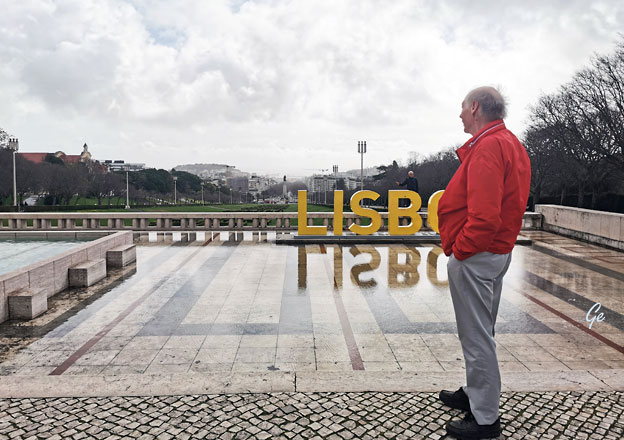
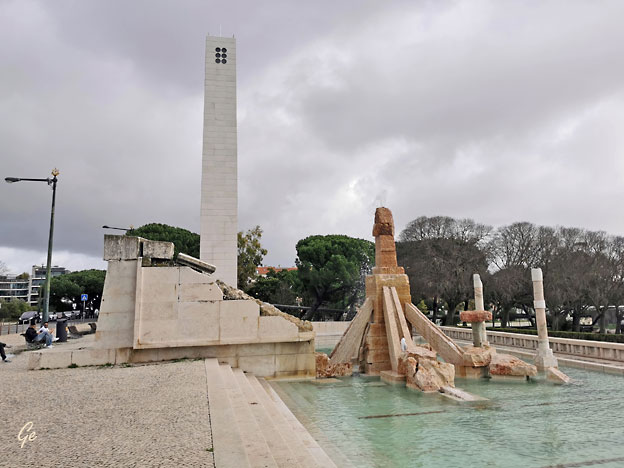
Utsiktspunkt i Lisboa, Edward VII Park
 |
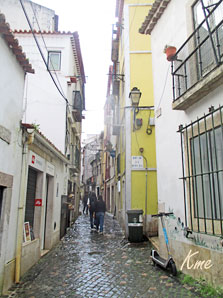 |
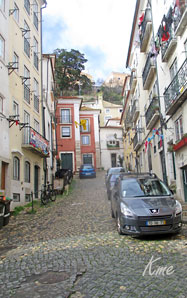
between the São Jorge Castle and the Tagus river. The district includes the freguesias (parishes) of São Miguel, Santo Estêvão, São Vicente de Fora
and part of the two streets, "Freguesia da Sé: Rua do Barão" and "Rua São
João da Praça". It contains many important historical attractions, as well
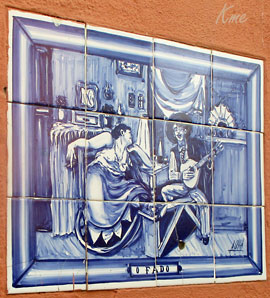
as an abundance of Fado bars and restaurants.
 |
The name Alfama originates from the Arabic al-ḥamma (الحَمّة), meaning "hot springs". The Arabic word comes from the root meaning "to heat" or "to become hot", from which the word hammam (Arabic: حَمَّام, lit. 'bath, bathhouse') also derives. During the times of Moorish rule, Alfama constituted the whole of the city, which later spread to the West (Baixa neighbourhood). |
The 1755 Lisbon earthquake did not destroy the Alfama, which has remained a labyrinth of narrow streets and small squares. Lately the neighbourhood has been restored with the renovation of old houses and new restaurants where Fado is sometimes played.
Alfama - Wikipedia (12. mars 2026)
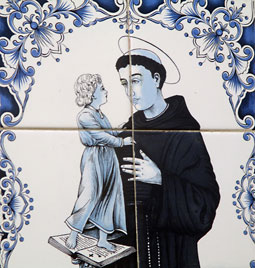 |
Anthony of Padua,
or Anthony of Lisbon; born Fernando
Martins de Bulhões (15 August 1195 – 13 June 1231) was a Portuguese Catholic priest and member of the Order of Friars Minor. Anthony was born to and raised by a wealthy family in Lisbon, Portugal, and died in Padua, Italy. Noted by his contemporaries for his powerful preaching, expert knowledge of scripture, and undying love and devotion to the poor and the sick, he was one of the most quickly canonized saints in church history, being canonized less than a year after his death. Anthony of Padua - Wikipedia (12. mars 2026) |
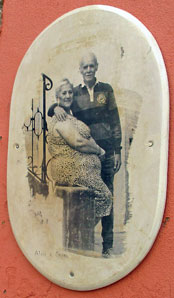 Her bodde Alice og Quim |
 |
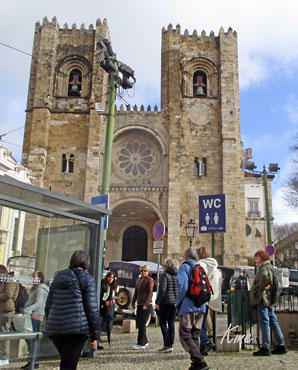
| The Cathedral
of Saint Mary Major (Portuguese: Santa
Maria Maior de Lisboa or Sé-Catedral Metropolitana Patriarcal de Santa Maria Maior de Lisboa), often called Lisbon Cathedral or simply the Sé (Sé de Lisboa), is a Roman Catholic cathedral located in Lisbon, Portugal. It is the oldest church in the city, built in 1147. The cathedral has survived many earthquakes and has been modified, renovated and restored several times, resulting in a mix of different architectural styles. It is the seat of the Patriarchate of Lisbon, and has been classified as a National Monument since 1910. Lisbon Cathedral - Wikipedia (12. mars 2026) |
 |
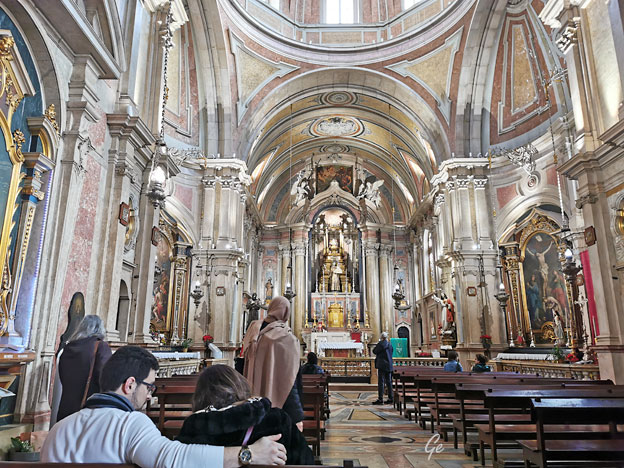
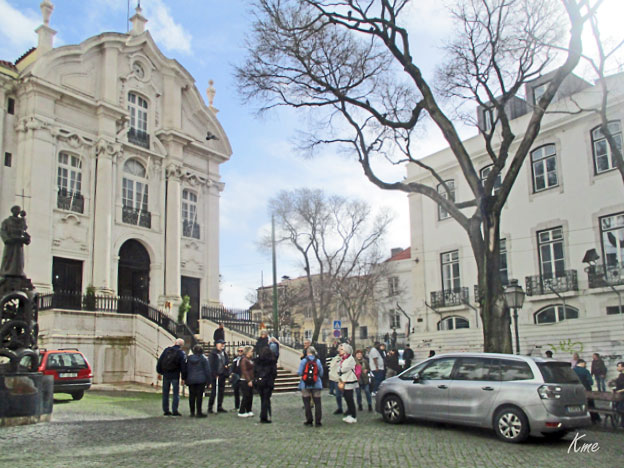
de Lisboa) is a Roman Catholic church located in Lisbon, Portugal.
It is dedicated to Saint Anthony of Lisbon (also known in the Christian world as Saint Anthony of Padua). According to tradition, the church was built
on the site where the saint was born, in 1195.
The church is classified as a National Monument.
In the 1755 Lisbon earthquake the Santo António Church was destroyed, with
only the main chapel left standing. It was fully rebuilt after 1767 to a Baroque-Rococo design by architect Mateus Vicente de Oliveira. This is the church that
can be visited today.
Church of Saint Anthony of Lisbon - Wikipedia (12. mars 2026)
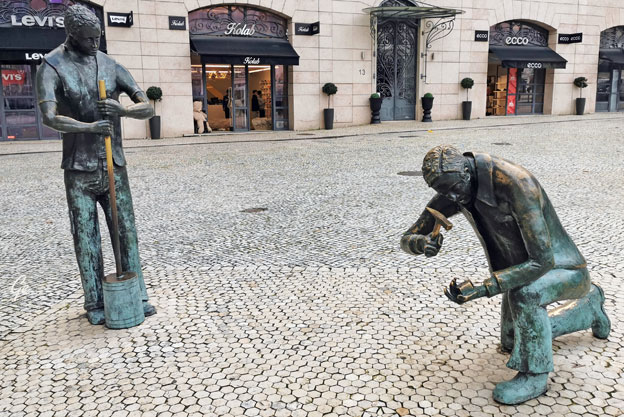
Public art sculpture of street workers on rua augusta in lisbon, portugal.
Bronze sculptures of street workers displayed on Rua Augusta in Lisbon,
Portugal, as part of a public art exhibit in a popular shopping area.
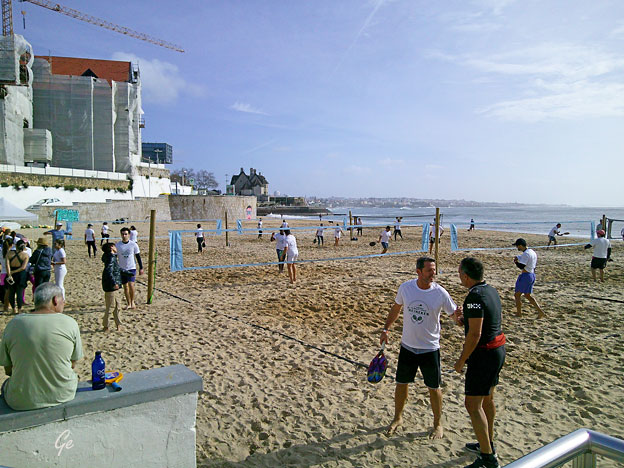
Det var marked i Cascais, så vi gikk dit.
Denne gangen fulgte vi kyststien hele veien
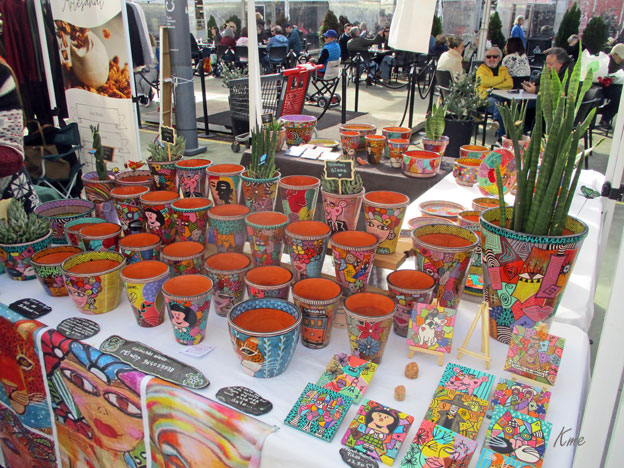
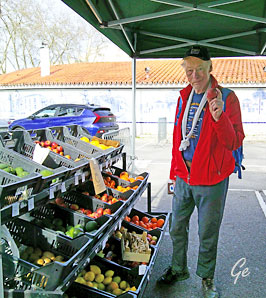
Cascais lørdagsmarked
 |
 |
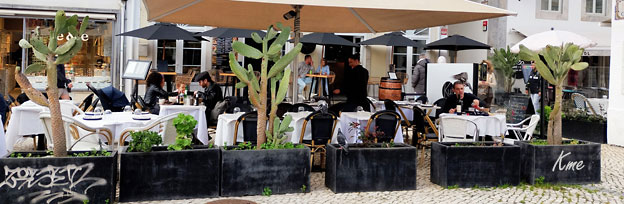
Restaurantgate i Cascais
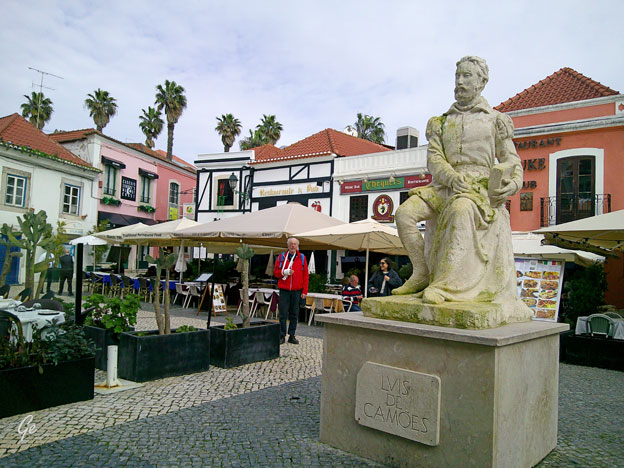
Torget med "stamrestauranten vår"
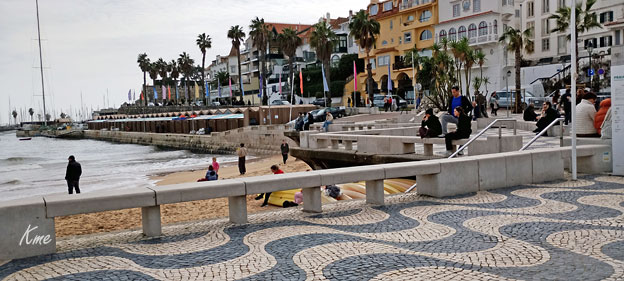
Havna og stranda i Cascais
 |
 |
||
|
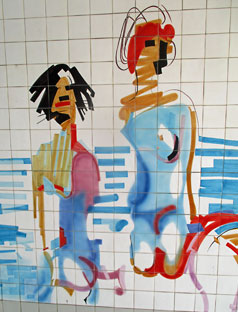
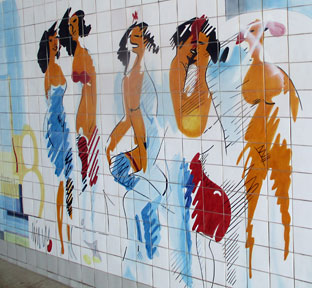
| Fine
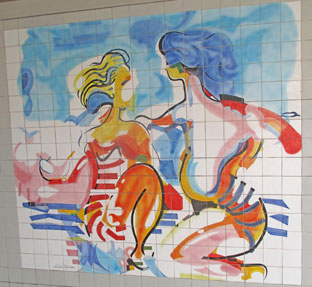
fliser i ganggtunnellene |
 |
Vi gikk hele veien tilbake til Estoril.
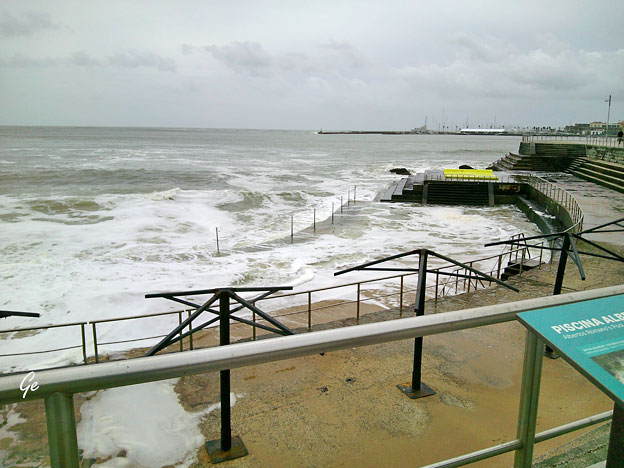
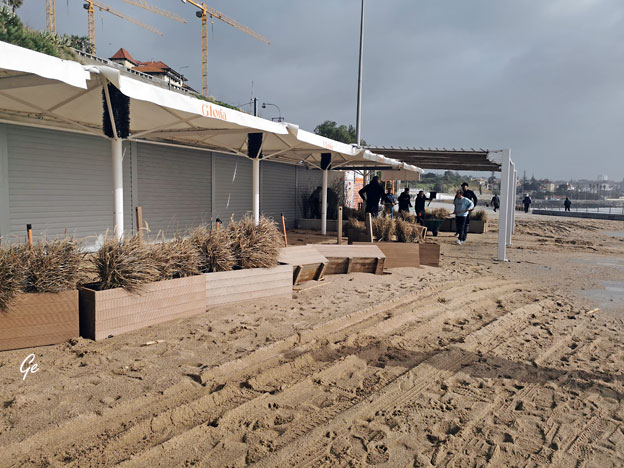
Bildet til venstre viser et basseng, men det var helt fyllt av sand
mens vi var der.
| Søndag
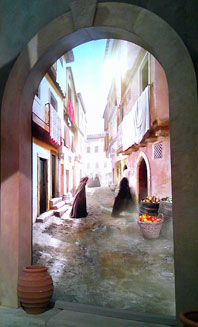
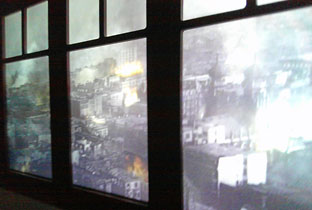
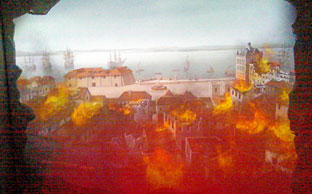
1. februar 2026 Vi fikk et nytt ekstremvær, Leonardo denne gangen. After the “damage” left by the Kristin depression, from which Portugal (mainly the Leiria area) is still recovering, a new storm has been announced for the coming days (until Saturday), which could bring flooding: the Leonardo storm. Storm Leonardo: the weather phenomenon that will dump the equivalent of three days of rain in just 24 hours: the critical date in Portugal (13. mars 2026) Vi tok toget til Belem for å gå på Jordskjelvmuseet Take an incredible journey back in time to 1755 to relive Lisbon's most dramatic and transformative event - the Lisbon Earthquake. |
 |
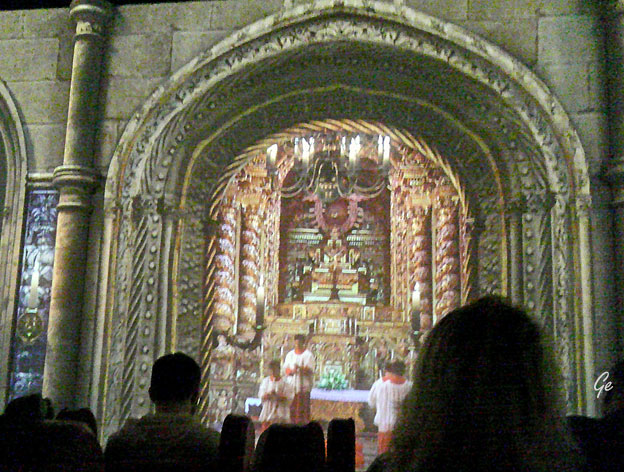
Til høyre er får vi en anelse om hvordag det føltes å være i kirken
når jordskjelve kom.
 |
 |
 |
 |
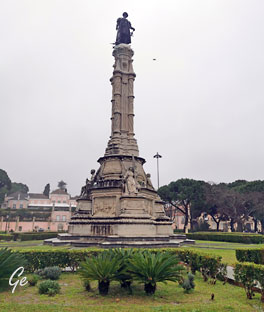 This dramatic statue commemorates the famous 15th-century explorer, Vasco da Gama. |
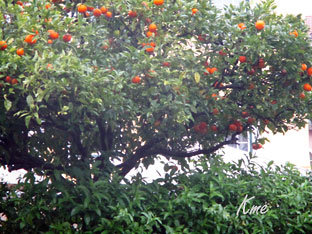 Appelsintre i parken i Belem |
across the Indian Ocean from Malindi in Kenya to Kozhikode was to open up European exploration of, and commerce with, India, and is considered a
landmark event and a turning point in World history
Vasco da Gama - Wikipedia (12. mars 2026)
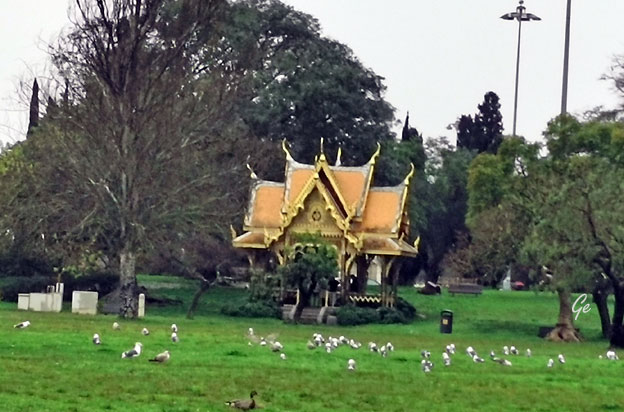
| Vi tok
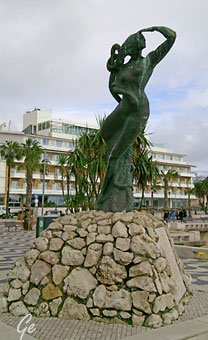
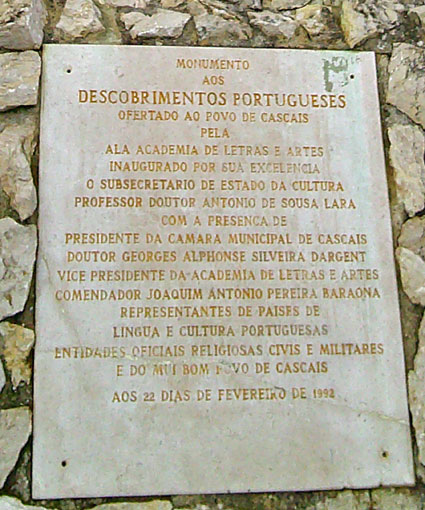
toget til Cascais for å gå kyststien nordover derfra. Denne skulpturen står i havna i Cascais. |
 |
 |
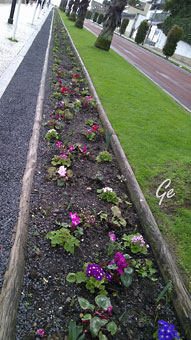 Langt blomsterbed |
Vi
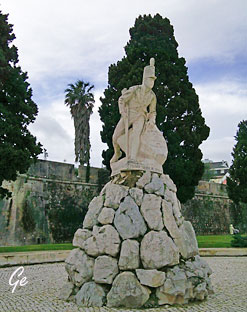
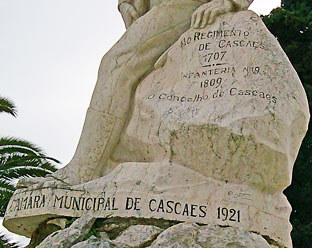
gikk gjennom festningsområdet i Cascais.Der står disse skulpturene. 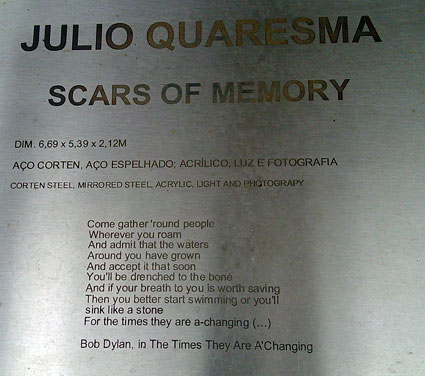 Bilde helt til høyre |
 |
 |
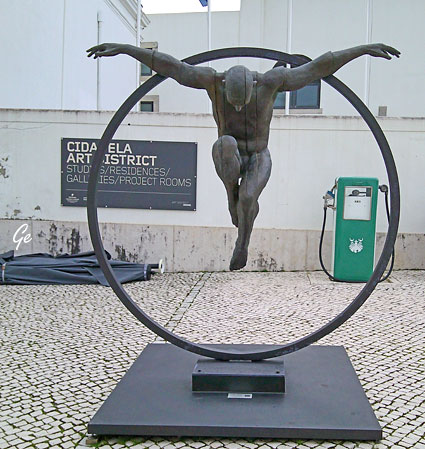 Rogério Timóteo was born in Anços, Sintra – Portugal in 1967. 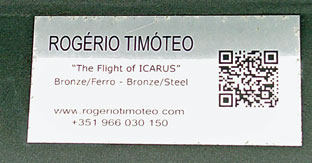 |
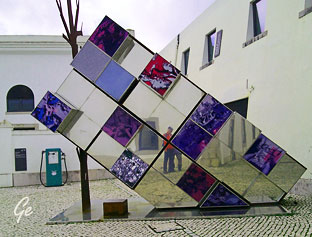 Julio Quaresma Scars of memory Born and raised in Africa, the Angolan – Portuguese artist Julio Quaresma was educated in Portugal. Julio Quaresma – Cardozo Fine Arts Mgmt 13. mars 2026 |
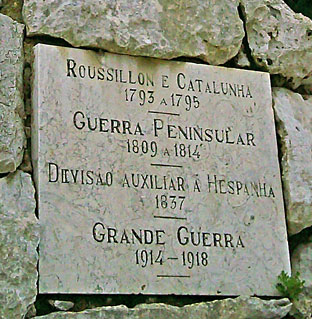 |
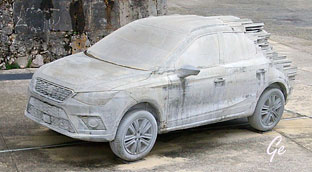 Skulptur utenfor festningen |
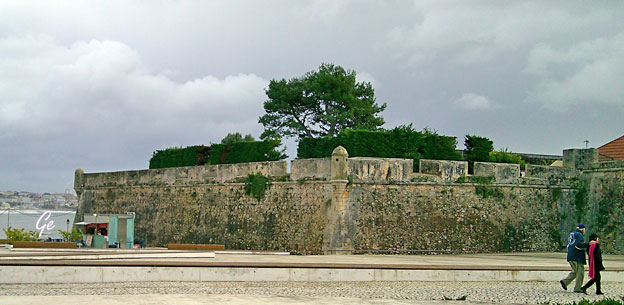
17th centuries to defend the Cascais coastline and River Tagus estuary and
to protect against attacks on the capital of Portugal, Lisbon. The citadel
incorporates three separate developments, the tower of Santo António de
Cascais, the Fortress of Our Lady of Light (Nossa Senhora da Luz de Cascais),
and the former Royal Palace area. It serves as an official summer residence
for the President of Portugal.
The first construction of a fort on the site was between 1410 and 1415.
Improvements to this were deemed necessary as the Cascais Bay was
constantly threatened by the English. In 1488 a medieval-style tower at the
tip of the Point of Salmodo, to the southwest of the Bay, was begun under
the orders of King John II of Portugal. The fort, known as the Torre de Santo
António de Cascais, was designed to share, with artillery ships and two other fortresses, resistance to possible military attack on Lisbon.
Citadel of Cascais - Wikipedia (13. mars 2026)
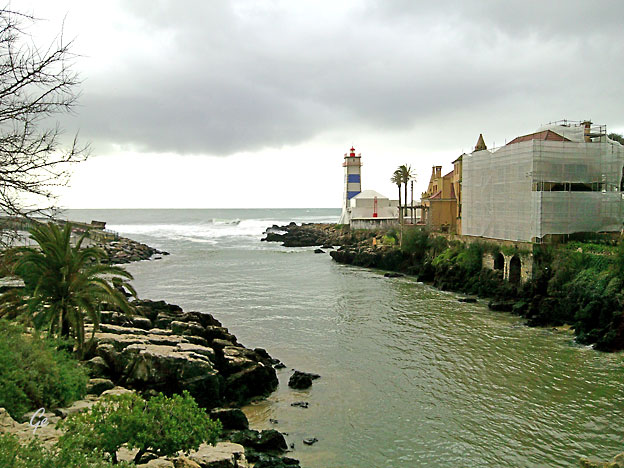
The Santa Marta Lighthouse is situated to the south of the centre of
Cascais, Lisbon District, Portugal, on the estuary of the River Tagus,
providing a light for the Cascais Bay and for the town's new marina.
It is a quadrangular masonry tower covered with white tiles, with
blue horizontal stripes and a red lantern. The lighthouse was built
on the grounds of the Santa Marta Fort, which now houses a
lighthouse museum.
Santa Marta Lighthouse - Wikipedia (13. mars 2026)
Vi kom ikke lenger på kyststien denne dagen.
Vi så det ville komme et skikkelig regnvær, og fant ut at det
var best å komme under tak.
Vi gikk ned i marinaen, og der var det mange restauranter.
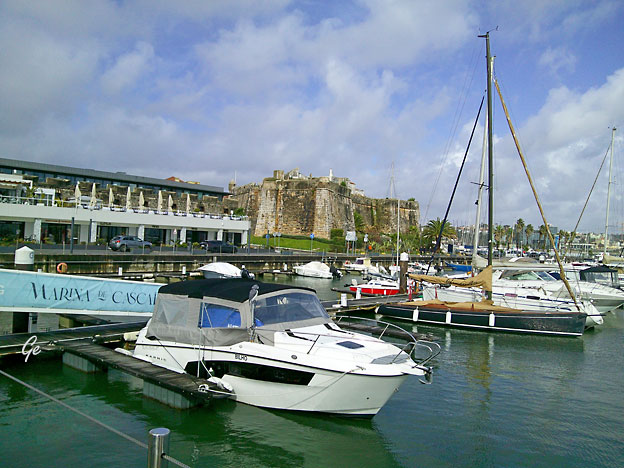
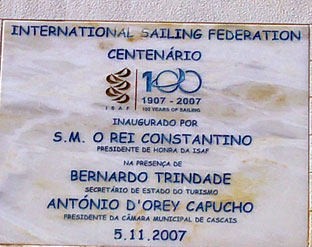 |
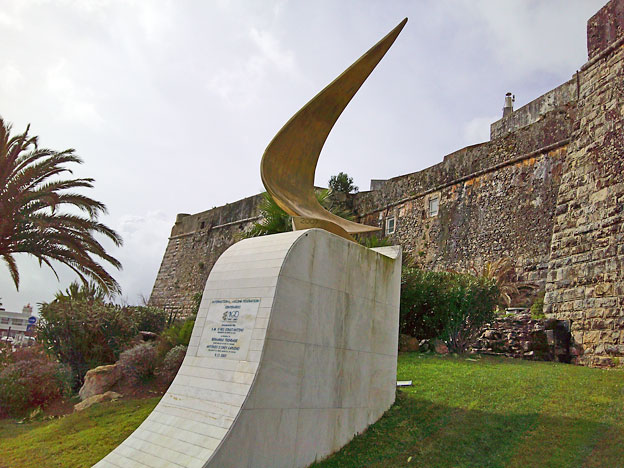 |
Regneskura er over, men vi valgte å gå tilbake til byen.
Turen nordover kunne vi ta en annen dag.
I dag ble det kyststien sørover fra Estoril
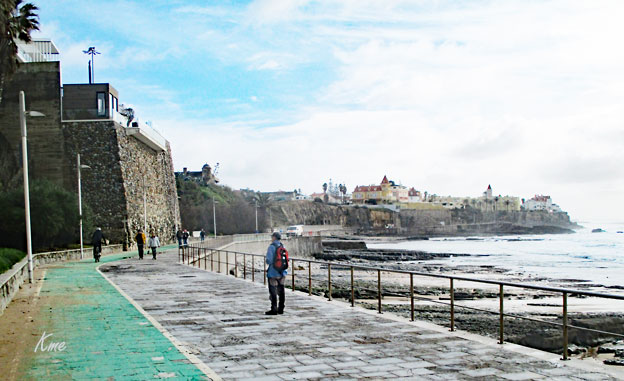
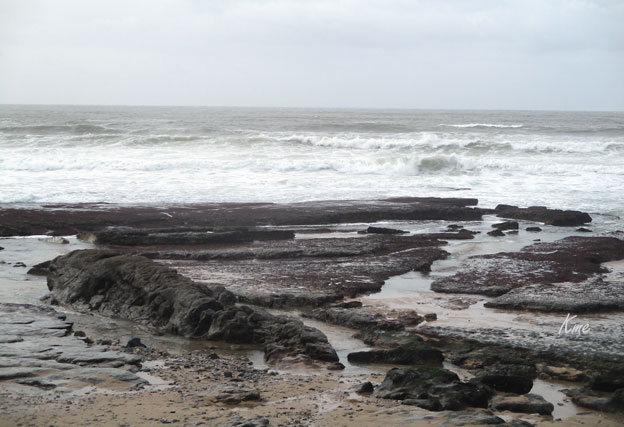
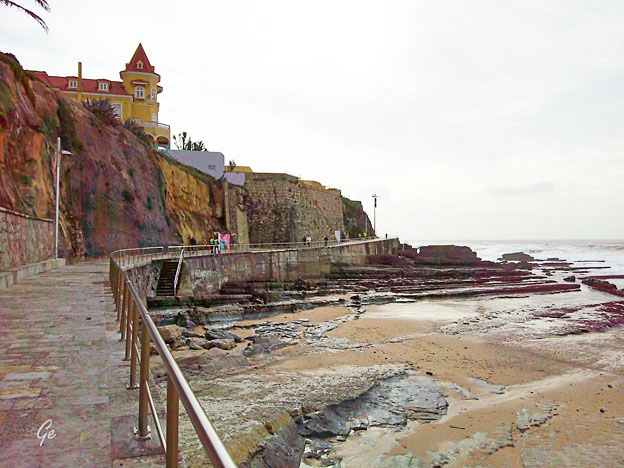
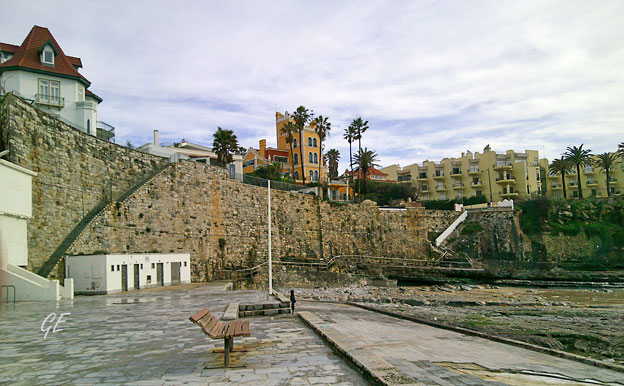
Her ender kyststien. Trappa var stengt pga uværet, så vi måtte gå tilbake
samme vei som vi kom. I hvertfall et stykke. Vi fant en oppgang fra kyststien til en bydel i Estoril, Joao.
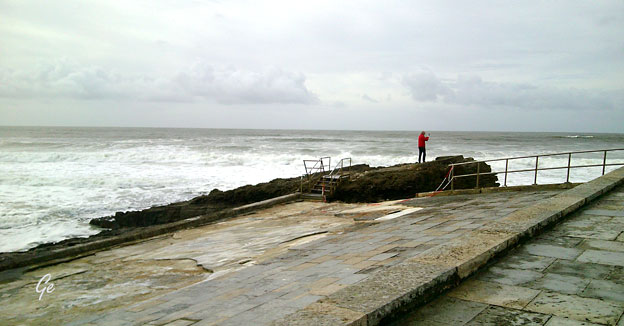
Karl Martin fotograferer,
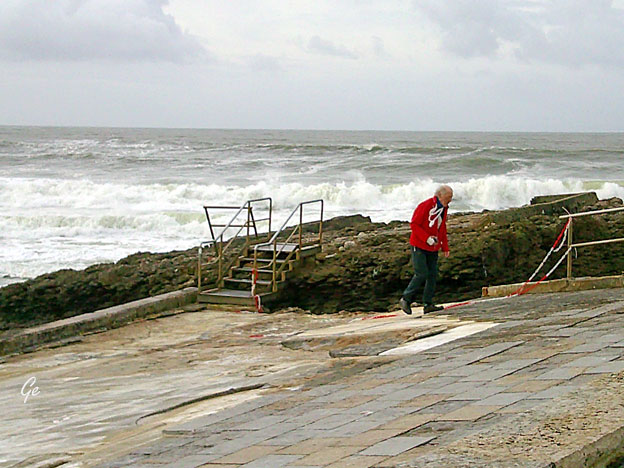
kom det inn på sikker grunn.
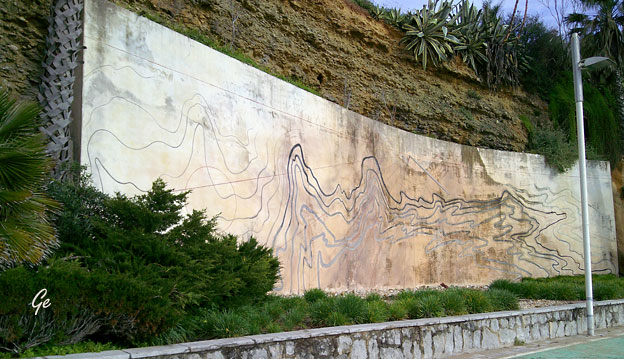
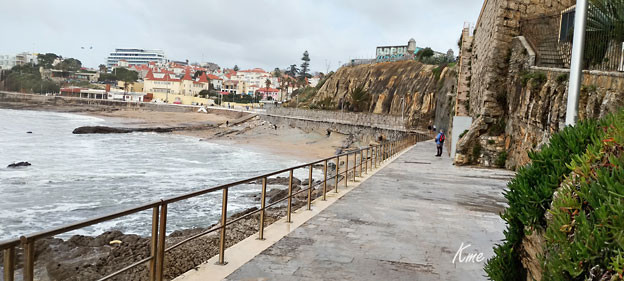
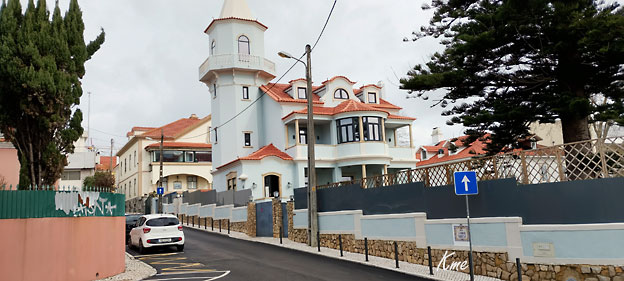 Estoril Joao |
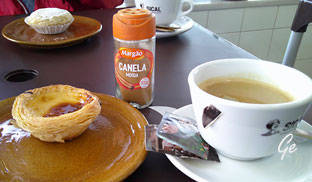 Kaffe og Belemkake på lokal cafe. |
Fra Estoril Joao gikk vi tilbake til hotellet.
På veien passerte vi Casino
 |
 |
Vi rusla litt i Estoril før regnet kom.
Ellers var vi på hotellet.
Vi skulle ha vært i Sintra, men turen ble utsatt på grunn av stormen Leonard.
Det hadde gått ras over veien vi skulle kjøre.
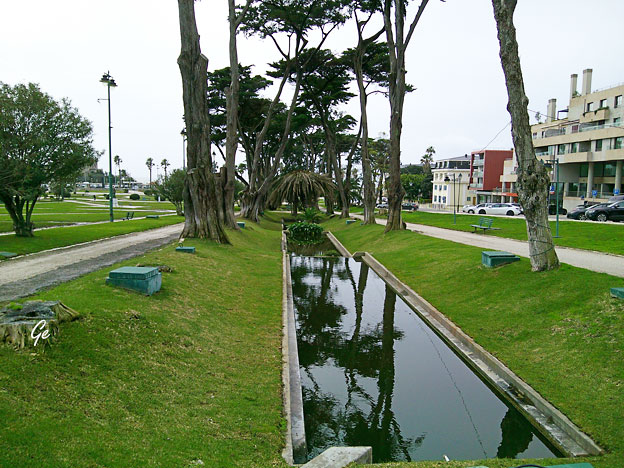
| Vi
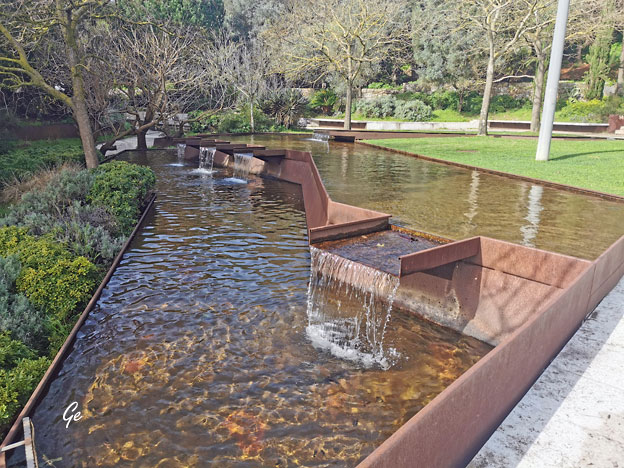
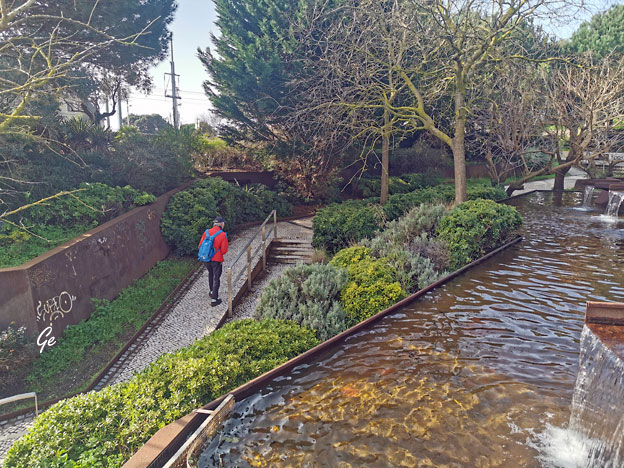
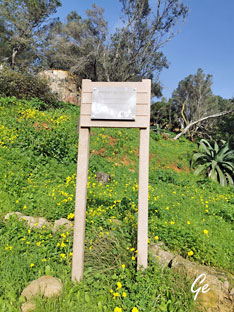
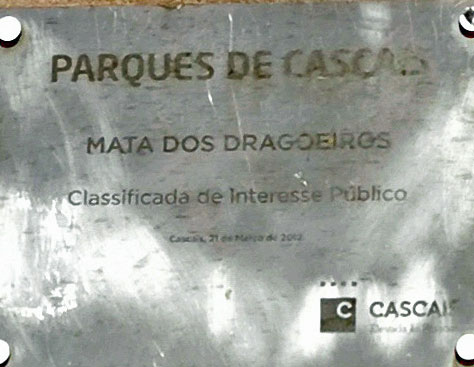
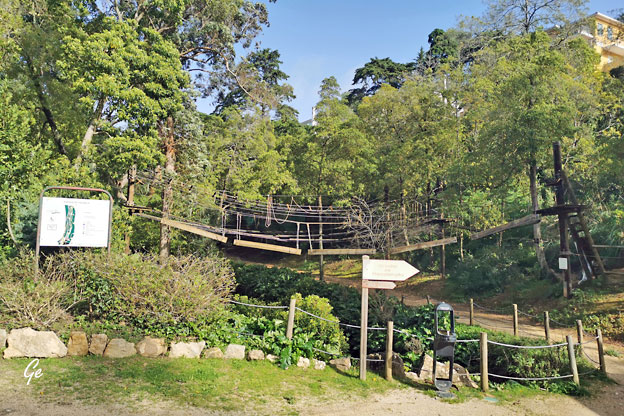
rusla litt langs kyststien mot Cascais, men svingte opp mot Estoril før vi kom til Cascais. Der fant vi en veldig fin park. |
 |
 |
 |
 |
 |
| Vi tok
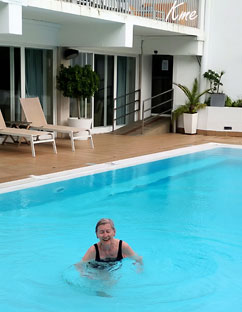
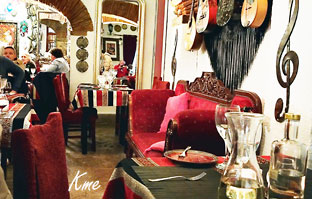
tog inn til Cascais for å handle. Men som vanlig ble det lite handling. Så vi tok toget tilbake til Estoril. Været var gansk bra så Grete prøvde bassenget på hotellet. Om kvelden var vi på fadokonsert i Lisboa. |
 |
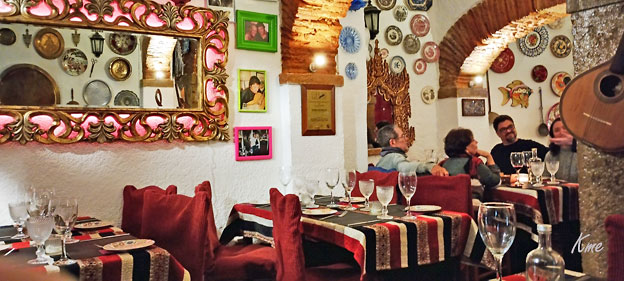
| Fado er en portugisisk
musikkstil og foredragsmåte med folkelig
opphav først og fremst i byene Lisboa og Coimbra. Særlig Lisboas fattigere bydeler Alfama og Mouraria regnes som fadoens fødested. Fado akkompagneres vanligvis av portugisisk og spansk gitar. Fado – Wikipedia (14. mars 2026) |
 |
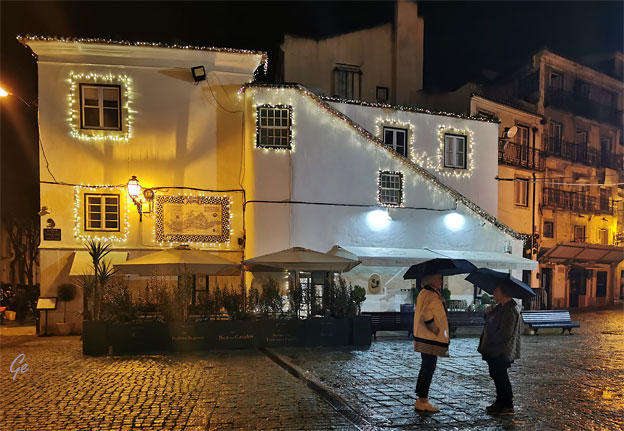
Været var ganske bra tidlig formiddag. Vi gikk en tur i Estoril,
men kom ikke så langt før regnet pøste ned igjen.
Resten av dagen var vi på hotellet.
 |
 |
Om formiddag gikk vi kystien sørover fra Estoril. Om ettrmiddagen en liten tur i Estoril Været var ganske bra. |
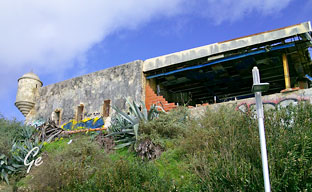 |
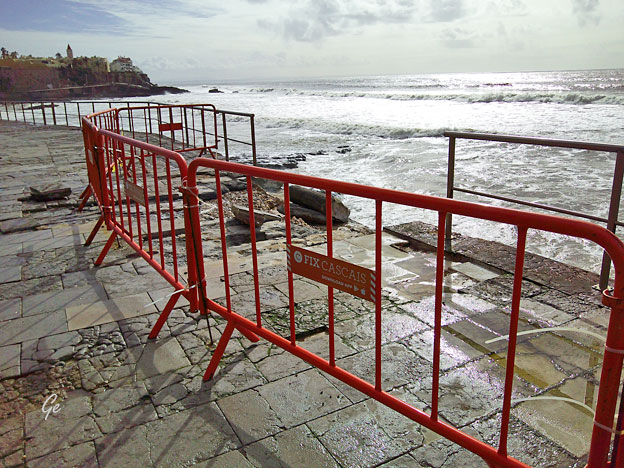
Stormen har ødelagt kanten mot sjøen .......
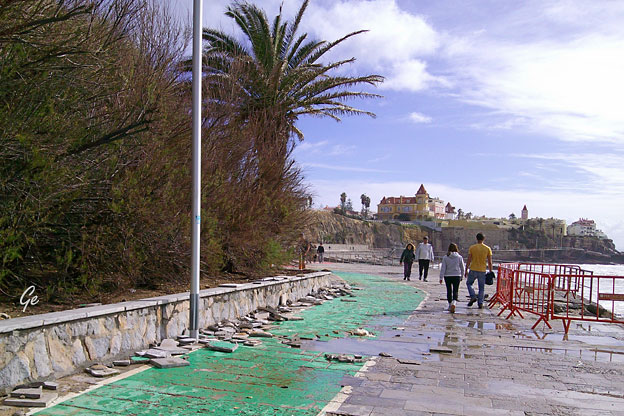
og stenene er slengt opp på gangveien.
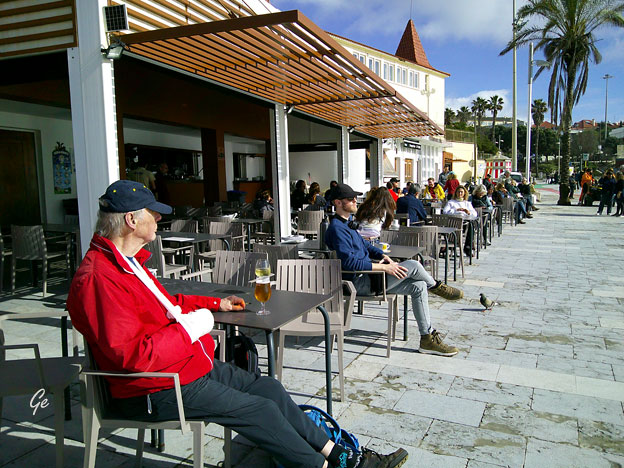
Endelig en følelse av vår.
|
 |
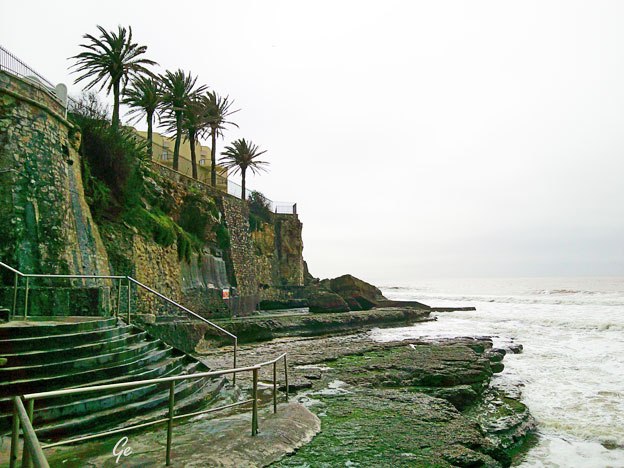
Denne gangen var trappa opp til utsiktspunktet åpen
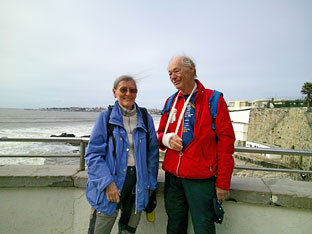
En amerikans dame tok bilde av oss der oppe.
Turen til Sintra var utsatt to ganger pga stormene.
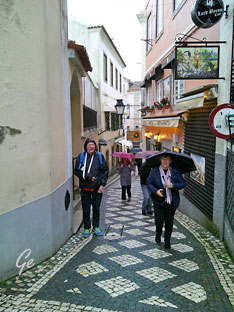
I dag ble det tur, men været var ikke bra. Regn og tåke hele dagen.
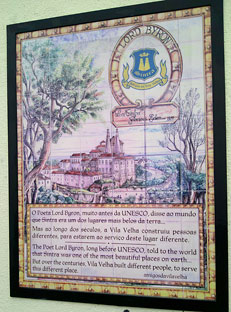
Sintra: officially the Town of Sintra (Portuguese: Vila de Sintra),
is a town and municipality in the Greater Lisbon region of Portugal, located on the Portuguese Riviera. The population of the municipality in 2021 was 385,654,
in an area of 319.23 square kilometres (123.26 sq mi). Sintra is one of the most urbanized and densely populated municipalities of Portugal. A major tourist destination famed for its picturesqueness, the municipality has several historic
palaces, castles, scenic beaches, parks and gardens.
Sintra - Wikipedia (14. mars 2026)
 |
 |
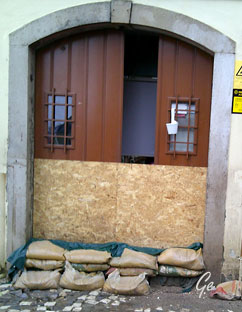 Flomsikring |
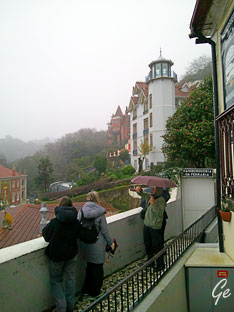 Utsiktspunkt (lite utsikt i dag) |
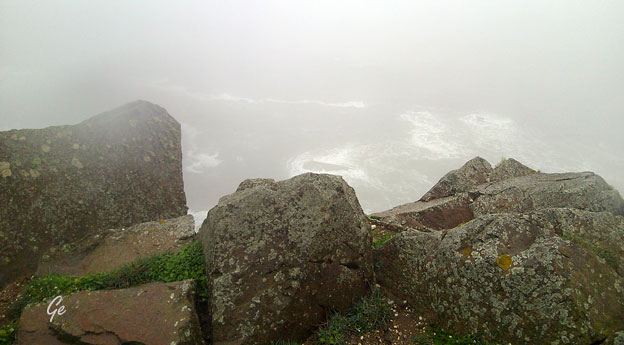
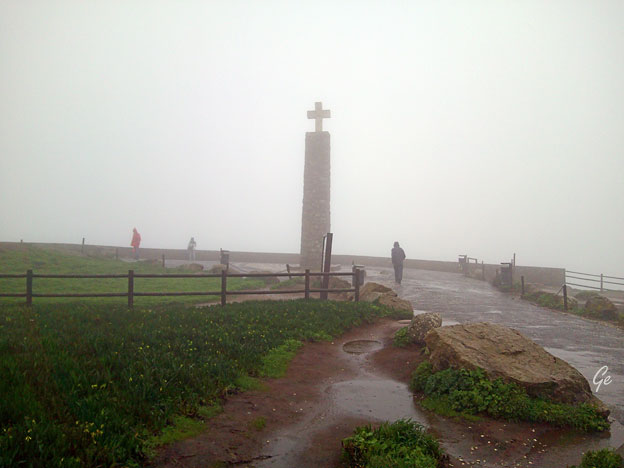
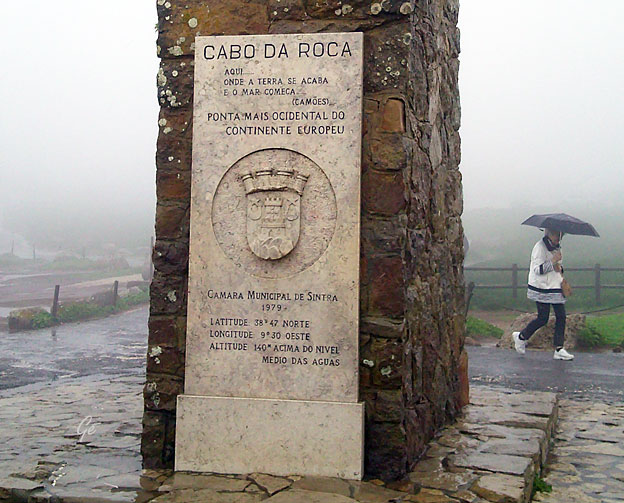
Cabo da Roca - Wikipedia (14. mars 2026)
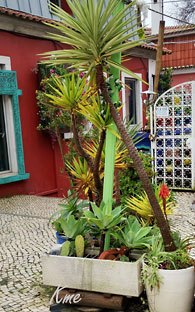
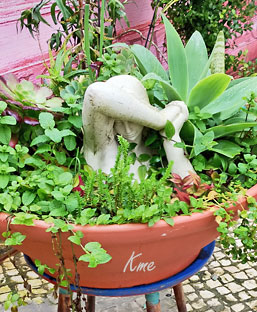
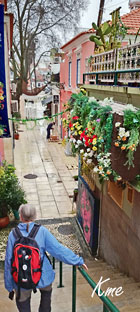
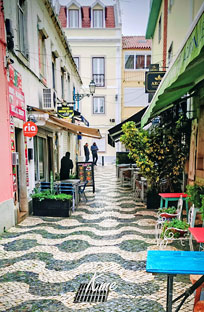
Vi skulle gå en tur for å se mer av Estoril, men endte opp ved kyststien nordover og videre i til Cascais. Om kvelden var det portvinsmaking på hotellet |
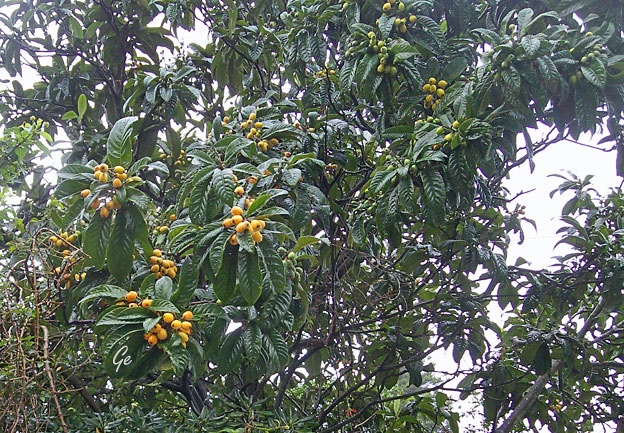 |
 |
 |
 |
 |
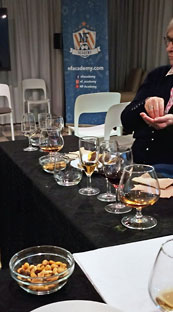 |
Portvinsmaking
på hotellet |
En liten tur i Estoril om formiddagen, men var mye på hotellet. Fint at det er OL på TV. Bildet er fra baren på hotellet |
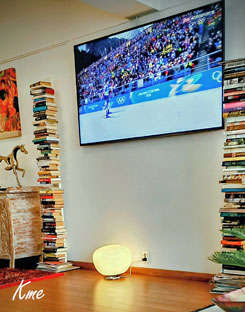 |
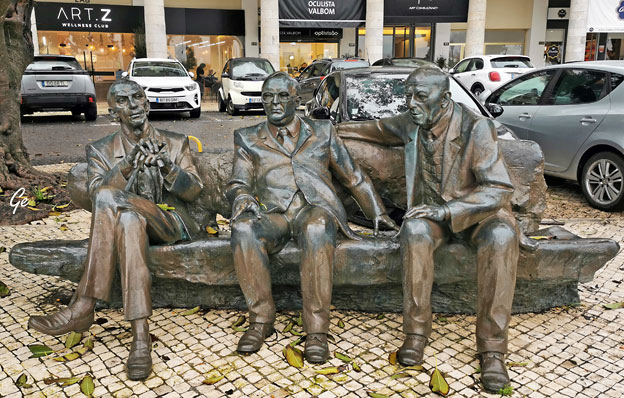
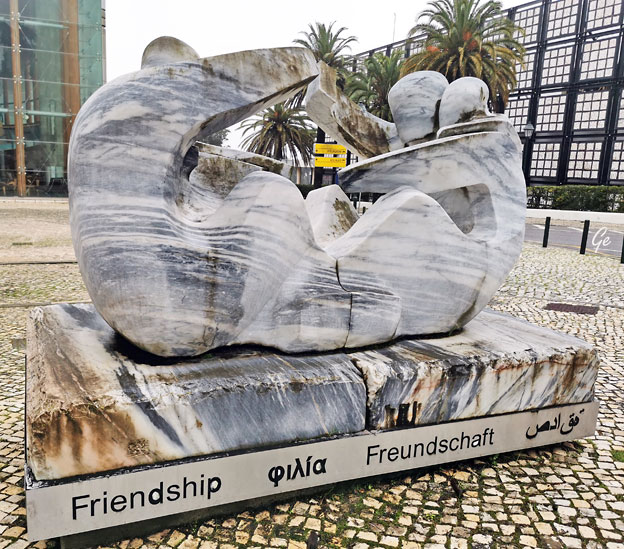 |
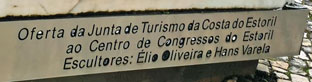 |
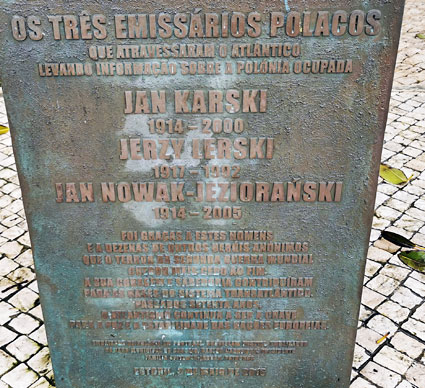 |
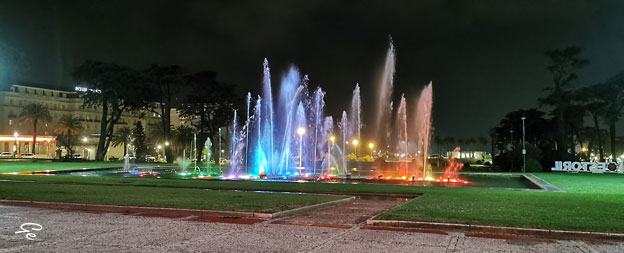
Om kvelden spiste vi middag på kinesisk restaurant i samme bygning som casoino
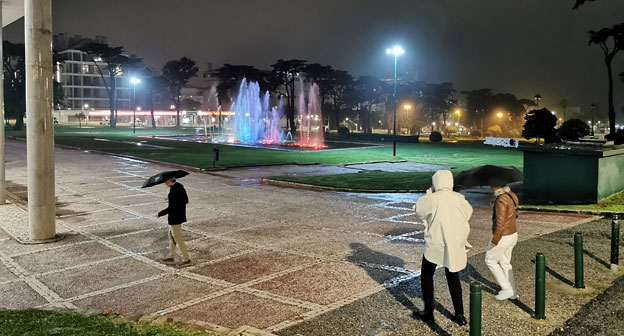
I dag var det heldagstur til Obidos og Nazare Skulpturen er fotografert fra bussen. |
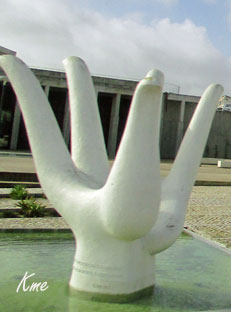 |
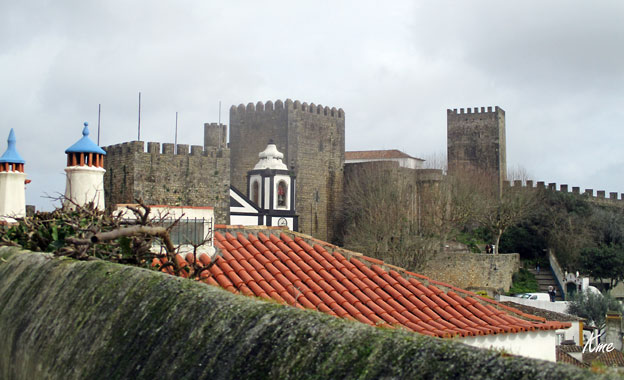
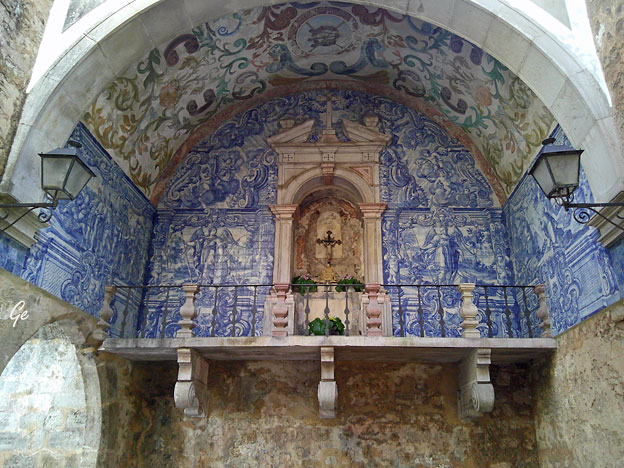
Fra inngangspartiet til byen
Óbidos is a town and a municipality in the Oeste region, historical
province of Estremadura and the Leiria district. The town proper
has approximately 3,100 inhabitants. The municipality population
in 2011 was 11,772 covering an area of 141.55 square kilometres
(54.65 square miles)
The name "Óbidos" is a Latinised (oppidum, citadel) derivation of
the older Celtic "Eburobricio". The municipality grew from a Roman
settlement near the foothills of an elevated escarpment.
In 1210, King Afonso II gave the title of this village to Queen Urraca.
Since then, Óbidos has often been patronized by the Queens of Portugal,
giving rise to its informal title as Vila das Rainhas
(English: town of the Queens); several royal consorts enriched the
village with donations from the Middle Ages until the 16th century.
Óbidos, Portugal - Wikipedia (14. mars 2026)
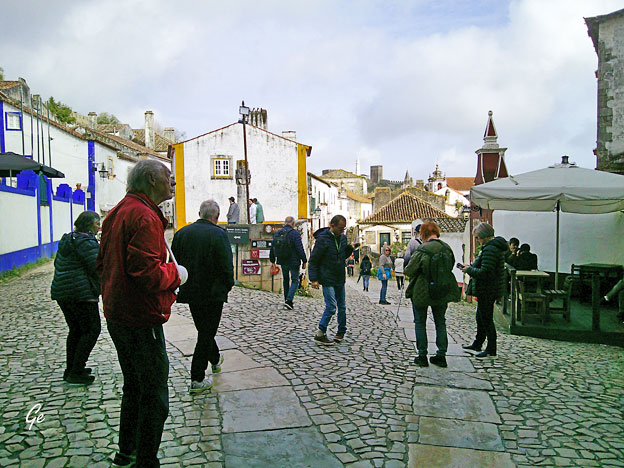
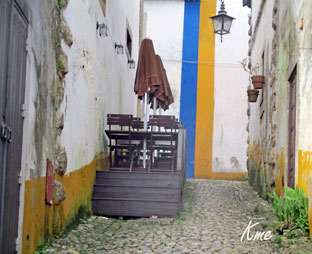
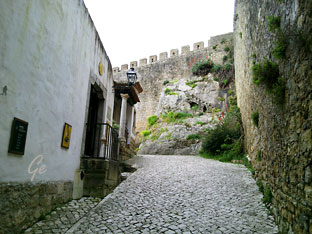
Byens to gater
 |
Fortausrestaurant
i Obidos |
 |
 |
 |
 |
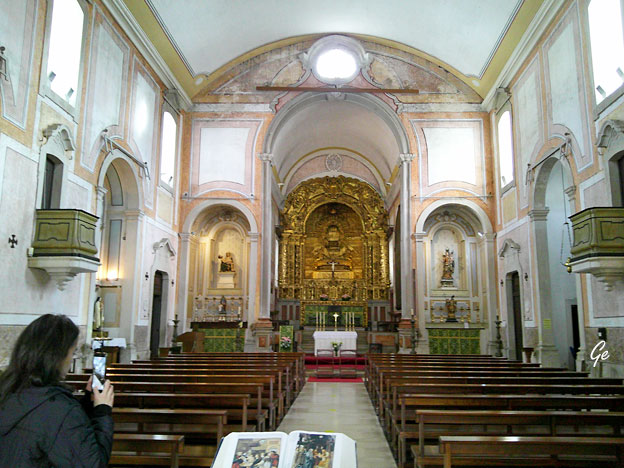
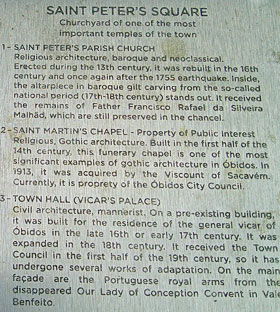
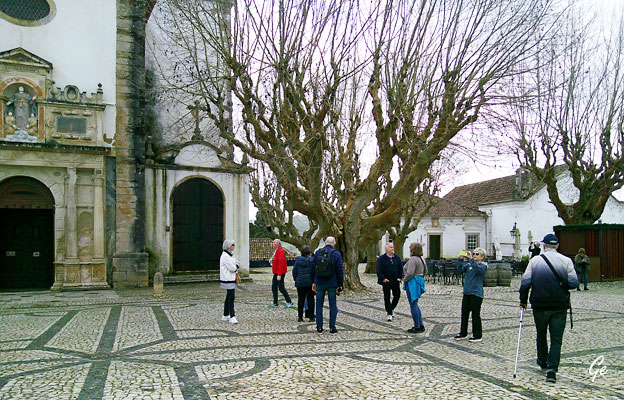
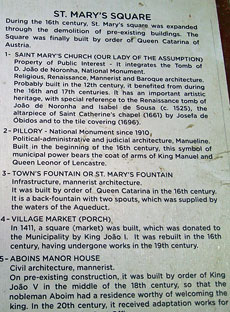
During the 16th century St Marys Square was expanded through the demolition
of the existing building. The square was finally built by order of Queen Catarina
of Austria.
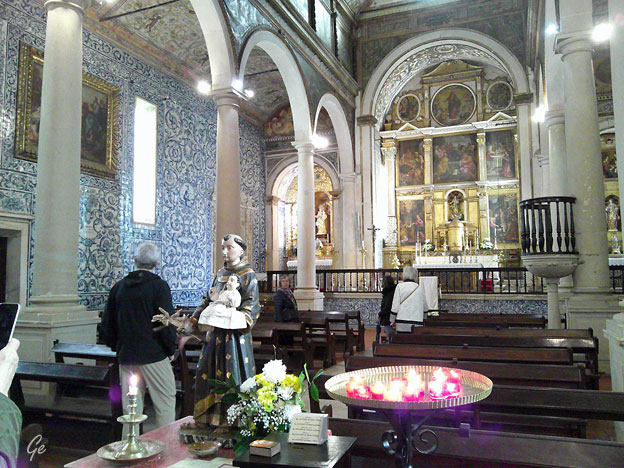
Saint Myarys church (our Lady of the Assumption) Property of Public Interest - I integrates the Tomb of D. Joao de Noronha, National Monument.
Religious, Renaissande, Mannerist and Baroque architecture.
Probably built in the 12th Century, it benefited from during the 16th an 17th Centuries. It has an important artistic heritage, with special refence to the Renaissance tomb of Joao d Naranho and Isabel de Sousa (ca 1525), the alterpiece
of St Cathrines Chapel (1661) by Josefa de Obidos and the tile covering (1692)
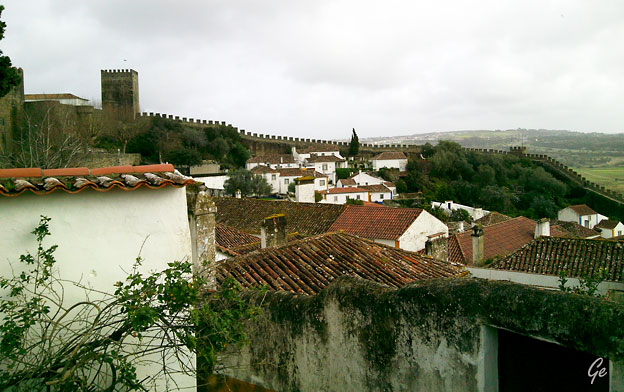
Borgmuren i Obidos
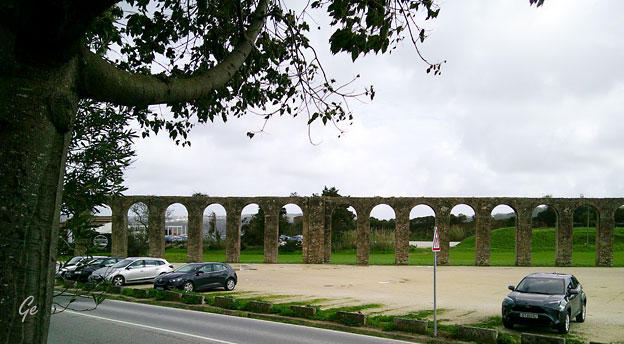
Akvedukt utenfor Obidos
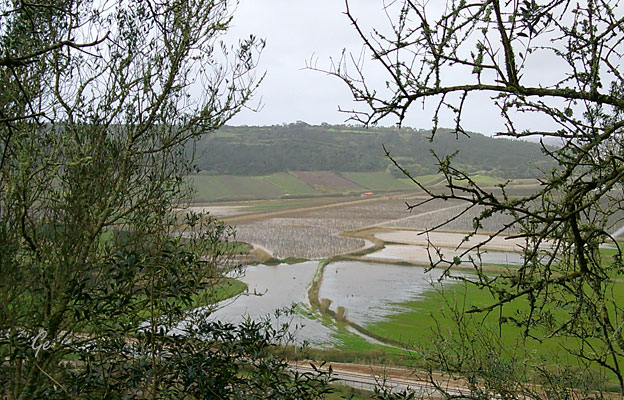
Oversvømmelse etter de tre ekstremværene de to siste ukene
Commissioned by Queen Catherine of Austria (wife of Portugal’s King João III)
in 1573, this aqueduct carried drinking water for the people of Óbidos.
Its arches crossed 3km of vineyards and orchards, starting in a spring in nearby
Usseira, and its water ended up in the town’s fountains, like the one you see
below the pillory in the main square.
The queen paid for the monument herself, by selling her lands around Óbidos.
It was restored in the 1600s, and survived the great earthquake of 1755. You’ll
see it as soon as you arrive in Óbidos, and it’s completely intact. The area
around it is now used as a parking lot, and is where many tourists leave their car. The town gate is just across the road.
Óbidos Aqueduct - Tourist Guide (14. mars 2026)
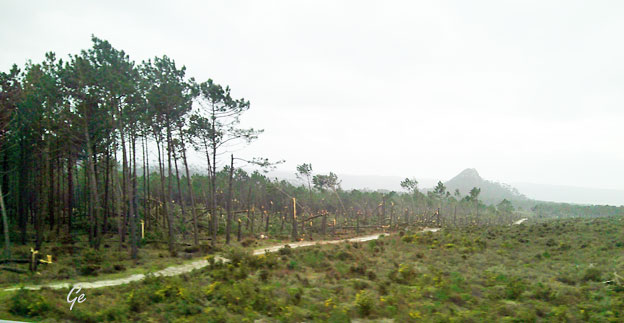
Roads were blocked by flooded rivers and fallen trees snapped power
lines. People are being evacuated from their homes in motor boats.
| Fra
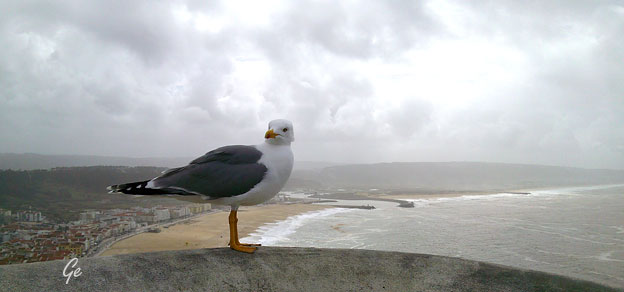
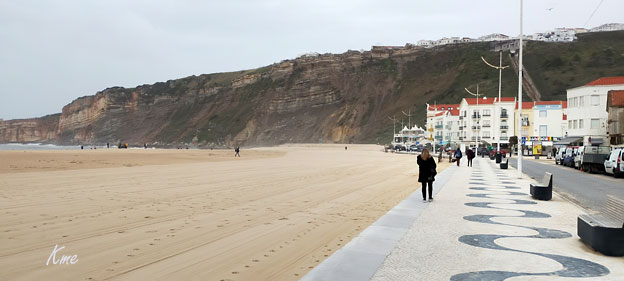
Obidos dro vi videre til Nazare Nazaré is a Portuguese resort town and municipality located in the Oeste region, in the historical province of Estremadura, and in the Leiria District. The municipality has a population of 14,889 in an area of 82.43 km2, while the town itself has around 10,000 inhabitants. |
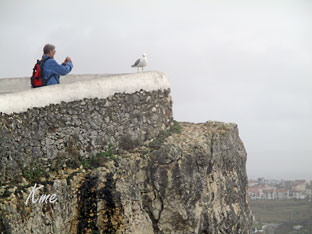 |
Nazaré, Portugal - Wikipedia (15. mars 2026)
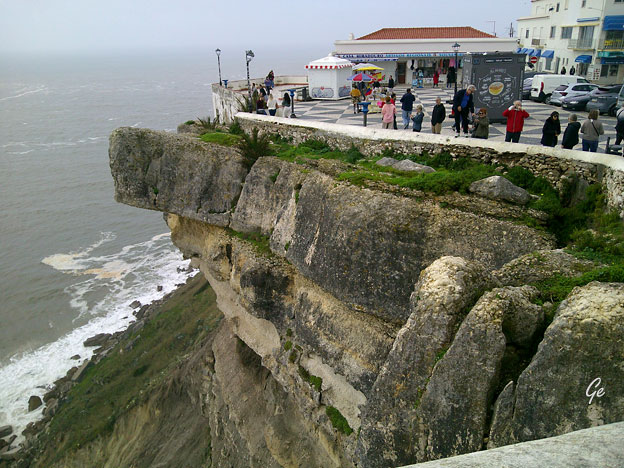
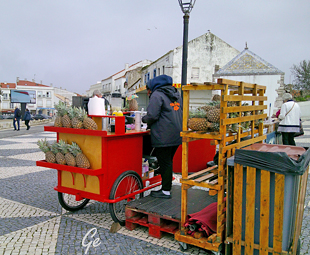 |
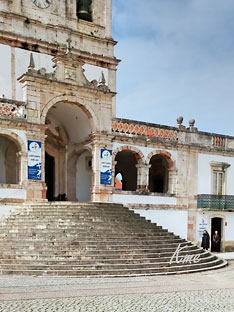 |
near the city of Mérida, Spain, by a monk in the 4th century. The statue was brought
to its current location in 711 by another monk, Romano, accompanied by Roderic,
the last Visigoth king of today's Portugal. After their arrival at the seaside, they
became hermits. Romano lived and died in a small natural grotto on top of a cliff
above the sea. After his death, according to his wishes, the king buried him in the
grotto. Roderic left the statue of the Black Madonna in the grotto on an altar.
Nazaré, Portugal - Wikipedia (15. mars 2026)
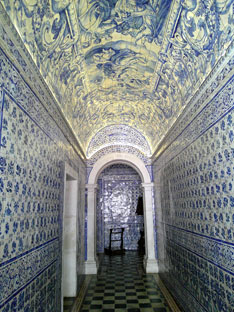 |
In
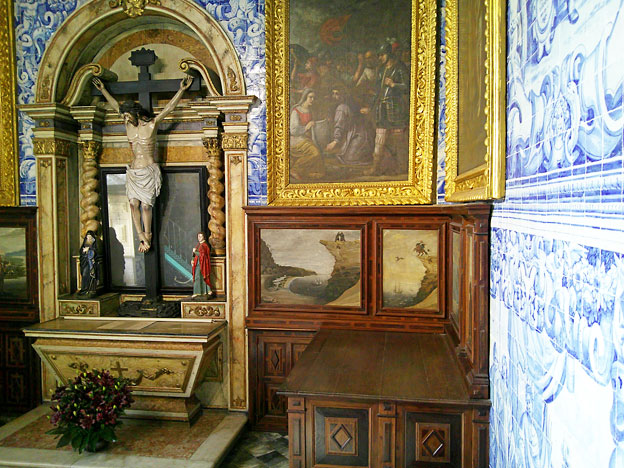
1377, King Fernando I of Portugal founded a new, more spacious church, which was totally transformed between the 16th and 19th centuries. The Sanctuary of Our Lady of Nazaré is a rich baroque building, with splendid tiles on its interior. Behind and above the main altar, visitors can see and venerate the miraculous statue of Our Lady of Nazaré. King John VI gave the church some religious figures, crowned with 18th century diadems. The sacred image is wrapped with a green cloak decorated |
The main chapel is separated from the body of the church with an arcade made from pau-santo and a few pillars decorated with mosaics in 19th century Italian
marble.
Nazaré, Portugal - Wikipedia (15. mars 2026)
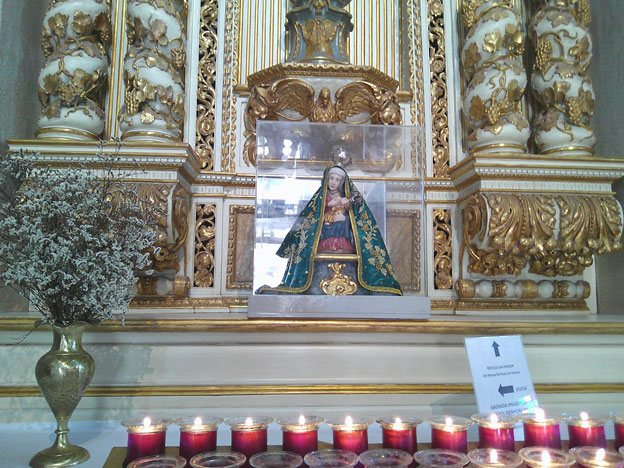
Our Lady of Nazaré.
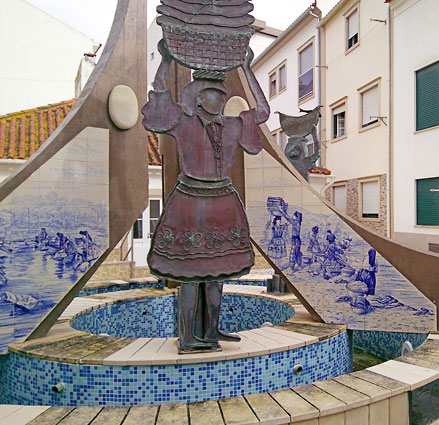
Fontene i Nazare sentrum
Situado no Largo dos Cedros, este monumento de homenagem à mulher
nazarena foi projectado por Fernando Pedro e inaugurado a 9 de Maio
de 1998.
Monumento circular de betão, alterna três proas com três figuras de
nazarenas em traje de trabalho. As proas estão parcialmente cobertas
com painéis de azulejos alusivos ao quotidiano de outrora da mulher da
Nazaré.
A presença de jactos de água e a iluminação relembram a anterior
ocupação deste Largo – fontanário público.
Monumento à Mulher da Nazaré - Findout Nazaré (15. mars 2026)
Dette monumentet, som er en hyllest til kvinnene i Nazaré, ligger i
Largo dos Cedros og ble designet av Fernando Pedro og innviet 9. mai 1998.
Dette sirkulære betongmonumentet veksler mellom tre baug, som hver
bærer tre figurer av kvinner fra Nasaret i arbeidsantrekk. Baugene er
delvis dekket med fliser som skildrer hverdagslivet til kvinner fra Nasaret
i fortiden.
Tilstedeværelsen av vannstråler og belysning minner om den tidligere
bruken av dette torget – en offentlig fontene.
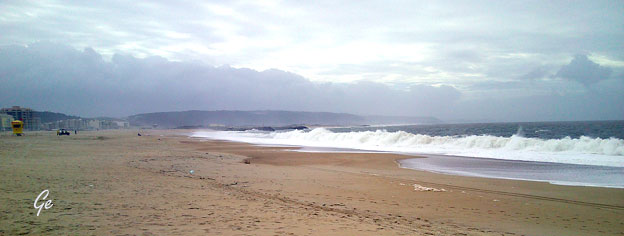
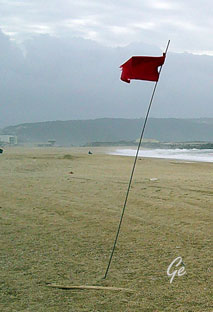 Rødt flagg på stranda. Det er for store bølger og understrømmer til at man får bade. |
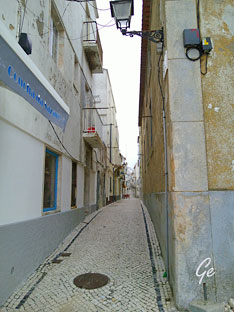 Gatene er lange og smale i Nazare |
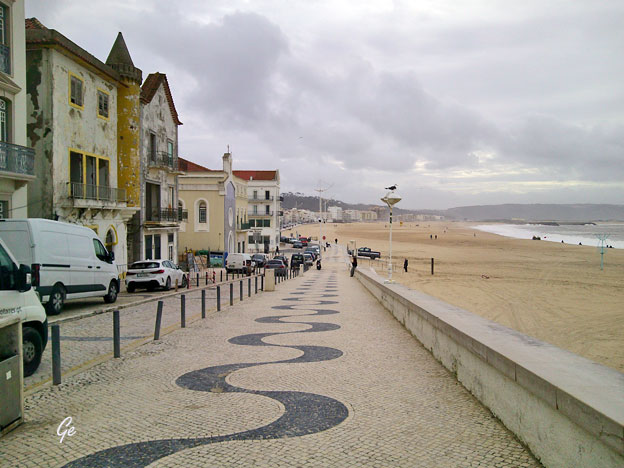
I dag tog vi toget inn til Lisboa. Dessverre var vi veldig uheldig med været. Det begynte å regne da toget var ved Belem, og fortsatte resten av dagen. (bortsett fra en halvtimes tid) |
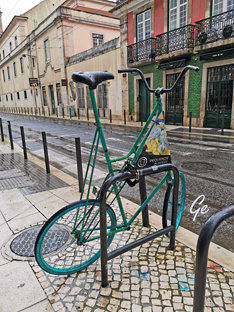 |
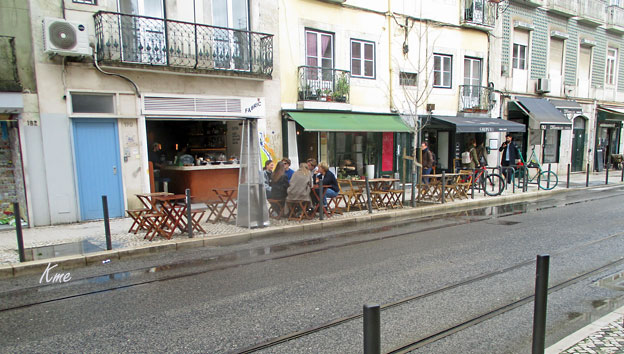
| Endelig
en dag med ganske bra vær. Grete tok sjansen på et bad. Vannet var ikke så kaldt, men bølgene var fortsatt ganske kraftige, så det ble ikke så langt bad. |
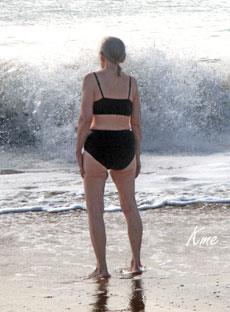 |
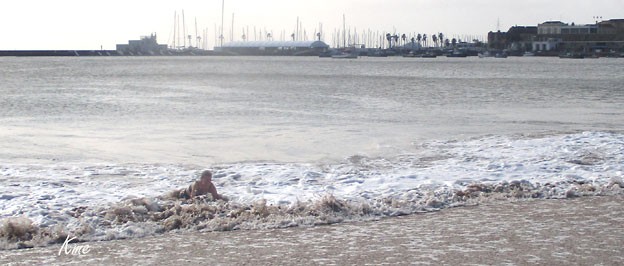
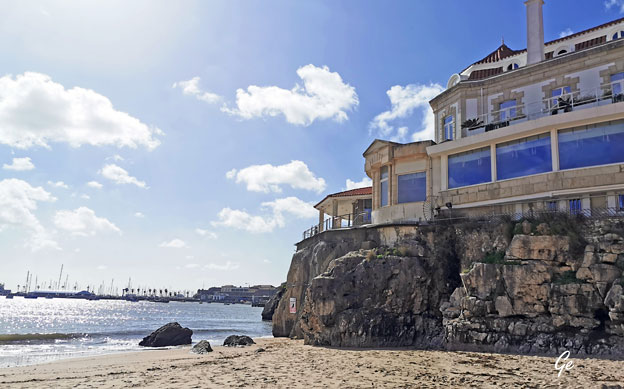
Stranda Grete bada på
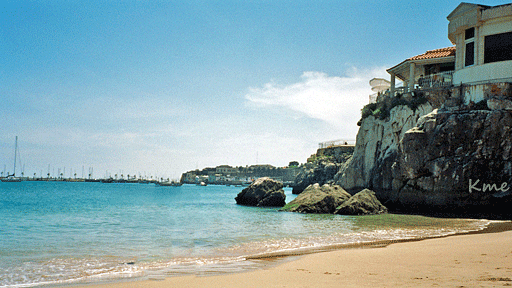
Bilde fra 2001. Da bada Grete på samme stranda.
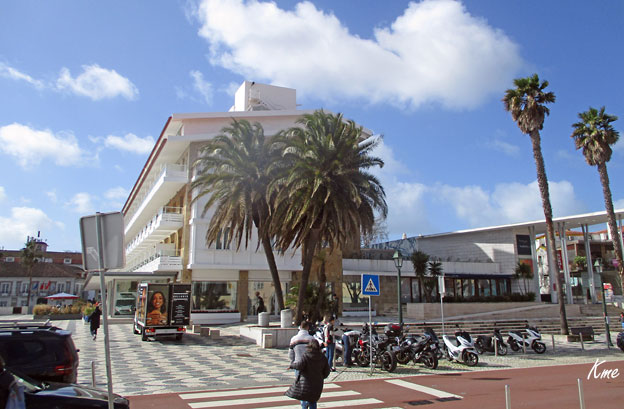
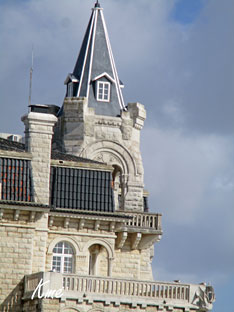
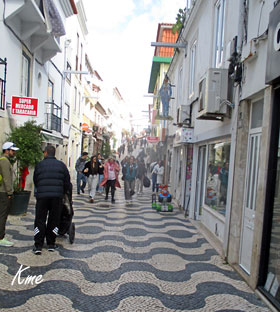
Cascais er også en moderne by.
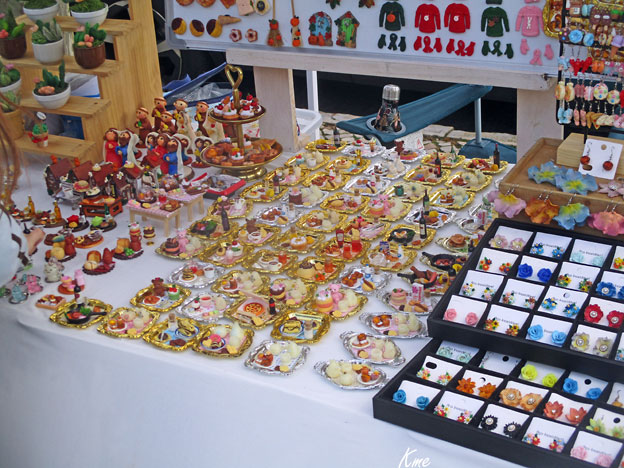
Suvenirbutikk
 |
 |
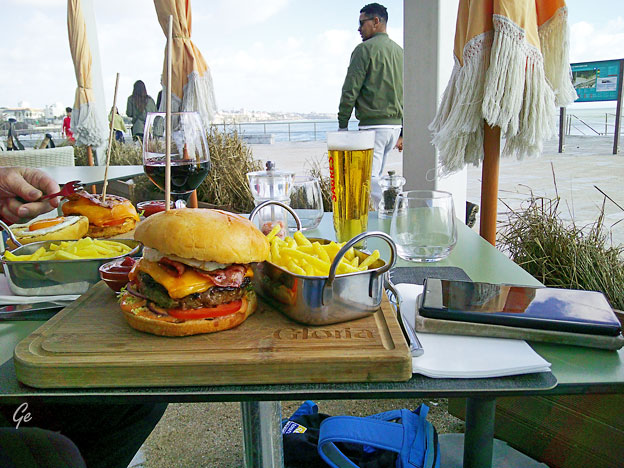
Dagens lunsj, spist ute på restauranten Gloria.
| Vi tok
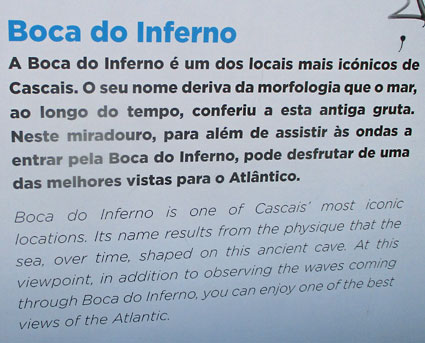
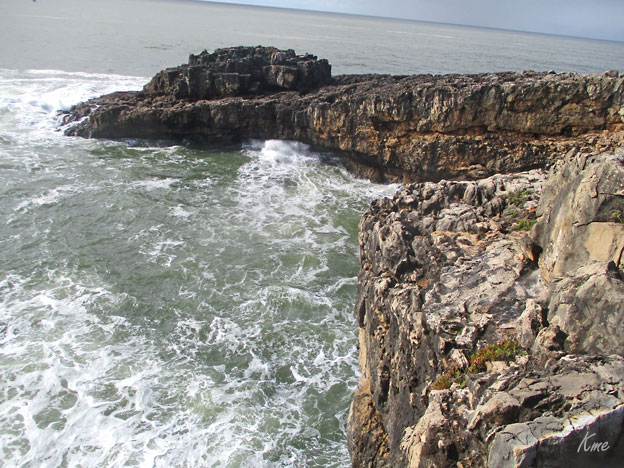
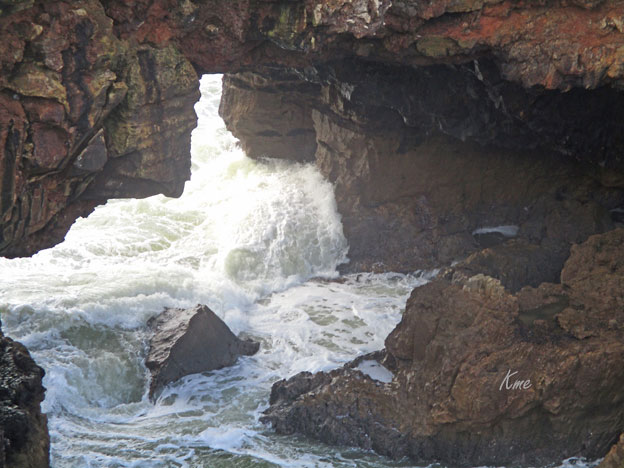
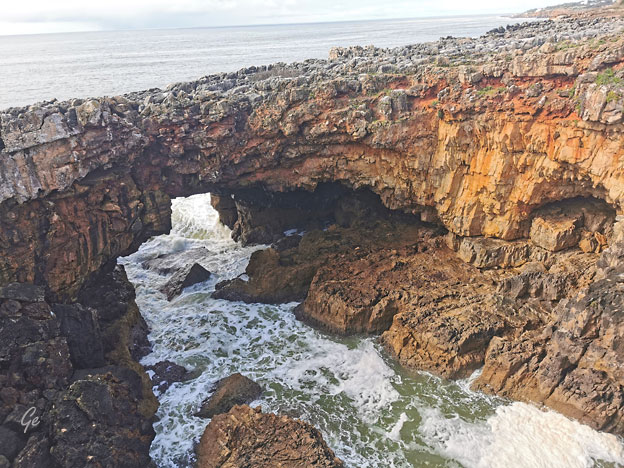
toget inn til Cascais for å følge kyststien nordover derfra. Da kom vi til Boco dp Inferno |
 |
 |
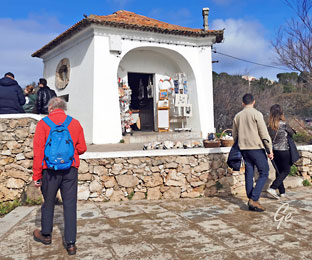 Suvenirkiosken ved Voca do inferno |
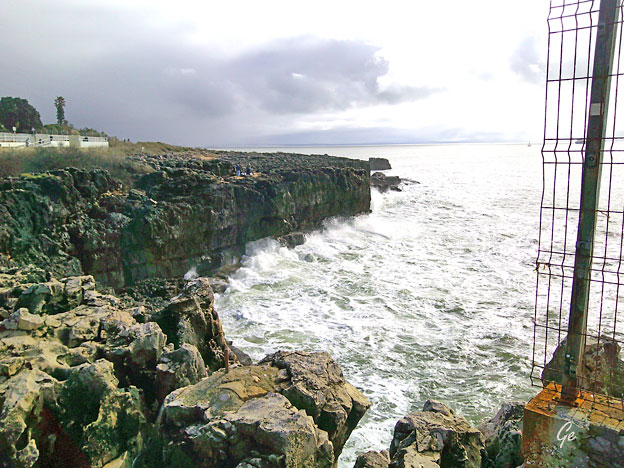
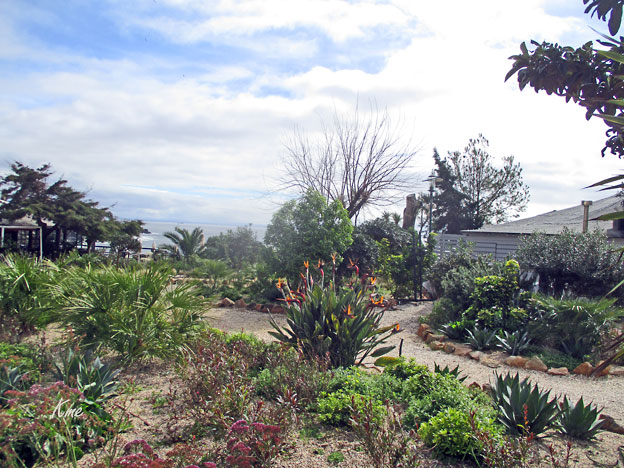
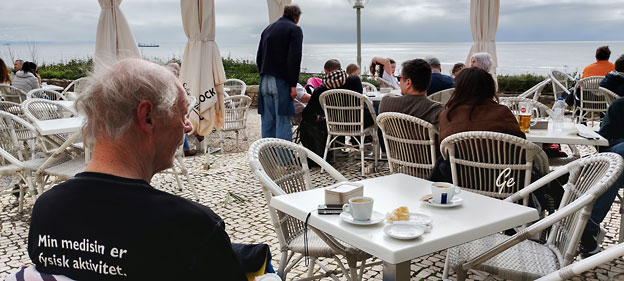
Kaffe og kake i finværet før vi gikk tilbake til Cascais
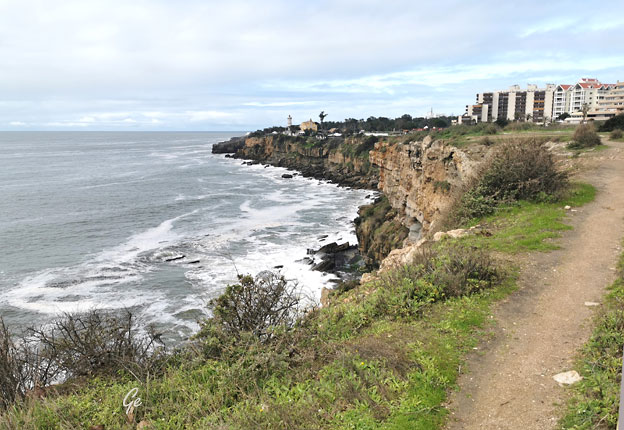
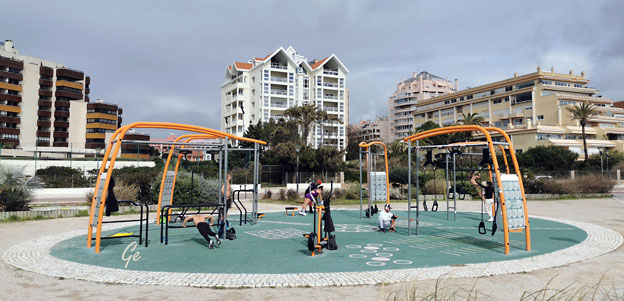
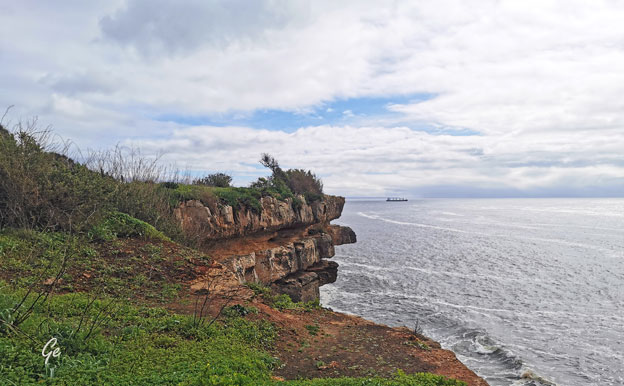
Lekeplass for voksne
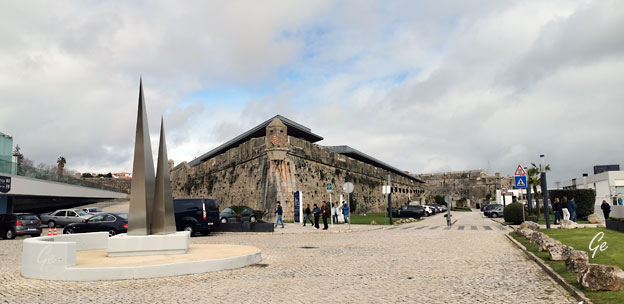
Vi er tilbake i byen Cascais
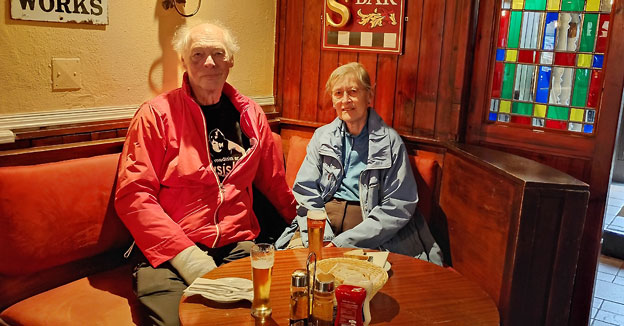
Vi spiste lunsj på "stamcafeen" vår i Cascais og tok toget tilbake til Estoril
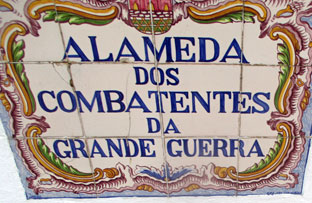
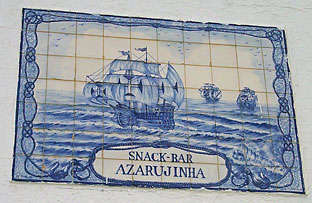
De har fine gateskilt i Portugal