Avreise med båt, tog og fly til Wien for vår årlige juletur.
Vi bodde på Saint shermin bed breakfast & champagne.
Sentralt beliggende og hyggelig sted.
Etter innsjekking ble det en liten bytur og en god middag.
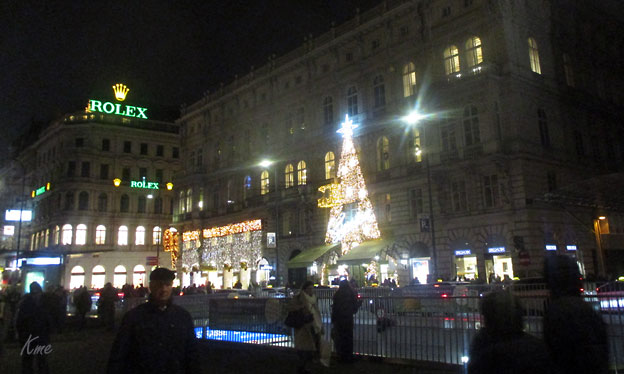
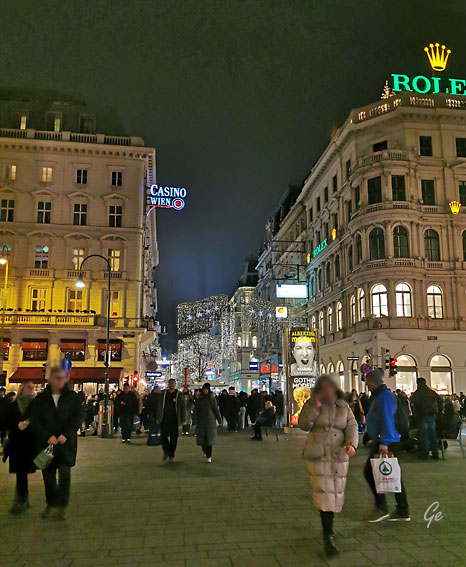
German: Wien, Austro-Bavarian: Wean is the capital, most populous city, and
one of the nine states of Austria. It is Austria's primate city, with just over two million
inhabitants.
Its larger metropolitan area has a population of nearly 2.9 million, representing nearly
one-third of the country's population. Vienna is the cultural, economic, and political
center of the country, the fifth-largest city by population in the European Union, and
the most populous of the cities on the river Danube.
The Romans founded a castrum at Vienna, which they called Vindobona, in the
1st century, when the region belonged to the province of Pannonia.
by a time in the sphere of influence of the Lombards and later the Pannonian Avars, when Slavs formed the majority of the region's population. From the 8th
century on, the region was settled by the Baiuvarii. In 1155, Vienna became the
seat of the Babenbergs, who ruled Austria from 976 to 1246. In 1221, Vienna was
granted city rights. During the 16th century, the Habsburgs, who had succeeded
the Babenbergs, established Vienna as the seat of the emperors of the Holy Roman
Empire, a position it held until the empire's dissolution in 1806, with only a brief interruption. With the formation of the Austrian Empire in 1804, Vienna became
the capital of it and all its successor states.
Vienna - Wikipedia (21. desember 2025)
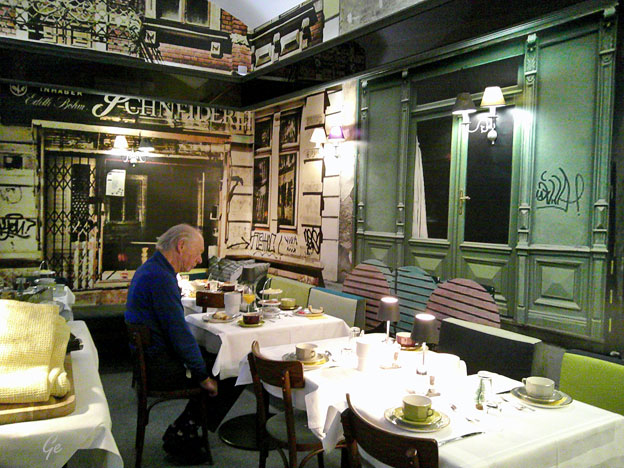
Frokost på hotellet. Veldig bra.
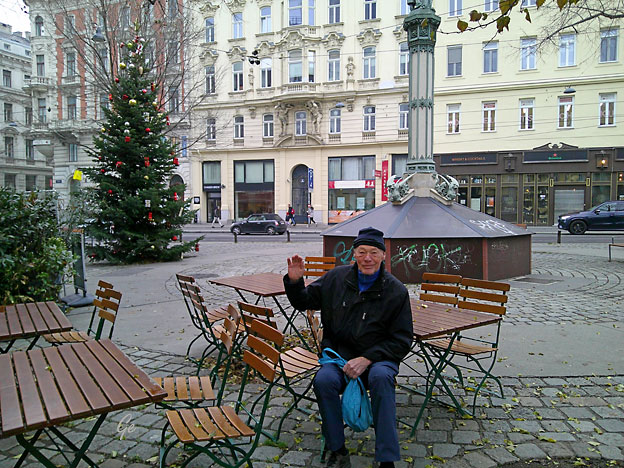
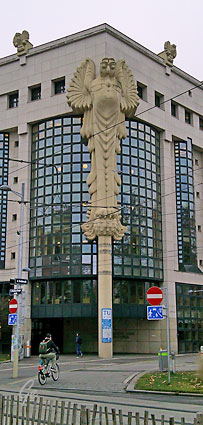
Plassen utenfor hotellet
| Fasade
ved Karls Platz Fra hotellet gikk vi til Hofburg og var der mye av dagen. |
 |
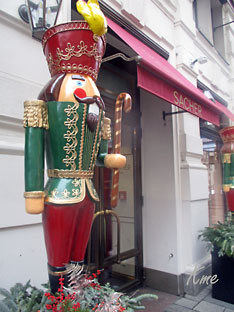 Alltid lang kø for å komme inn på Sacher. |
 |
 |
The Hofburg (German: [ˈhoːfbʊʁk])
is the former principal imperial palace of the Habsburg dynasty in Austria. Located in the center of Vienna, it was built in the 13th century by Ottokar II of Bohemia and expanded several times afterwards. It also served as the imperial winter residence, as Schönbrunn Palace was the summer residence. Since 1946, it has been the official residence and workplace of the president of Austria. Hofburg - Wikipedia (21. desember 2025) |
Palmenhaus
Palmenhaus means Palm House in German. It is a greenhouse that houses exotic plants and
flowers – some of them are used as decoration on various official events. Palmenhaus is also a
popular restaurant and cafe, with truly amazing location and atmosphere. The building of Palmenhaus is very interesting itself. It was first built in 1822, using a part of former city walls.
That old greenhouse was replaced by a Jugendstil-style structure in 1901 (architect Friedrich
Ohman). In late 1980’s, Palmenhaus was closed to the public and the building got almost
abandoned. It was opened again after a major renovation in 1998.
Vienna Burggarten, Palmenhaus, and Hofburg (21. desember 2025)
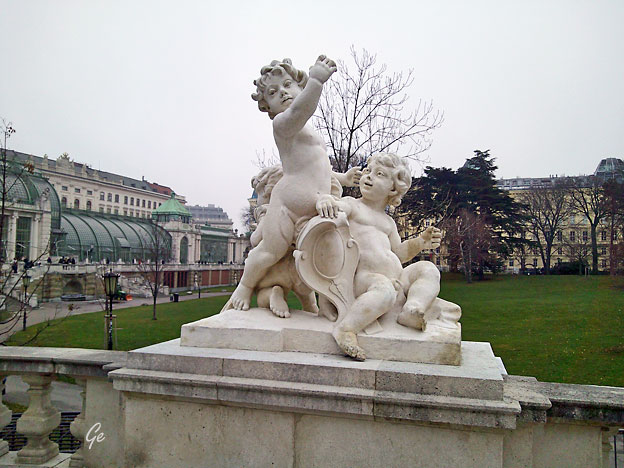
Palmehuset til venstre i bildet.
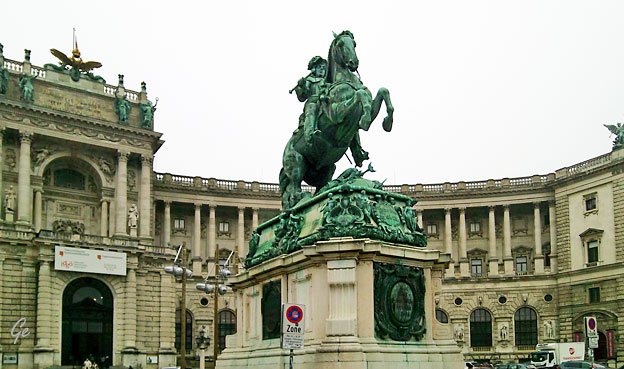
Prins Eugene av Savoy 1663-1736
Refused a command in the French military, a young Eugene popped across to Austria
and offered his sword and brain to Emperor Leopold I. He began his service at the lifting
of the 1683 siege of Vienna.
Prince Eugene Monument (21. desember 2025)
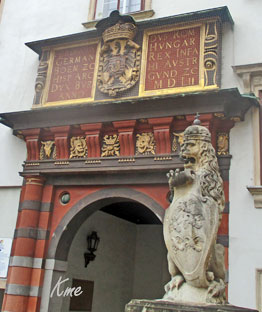 The Swiss Gate (Schweizertor), original main gate |
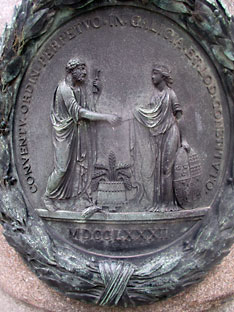 |
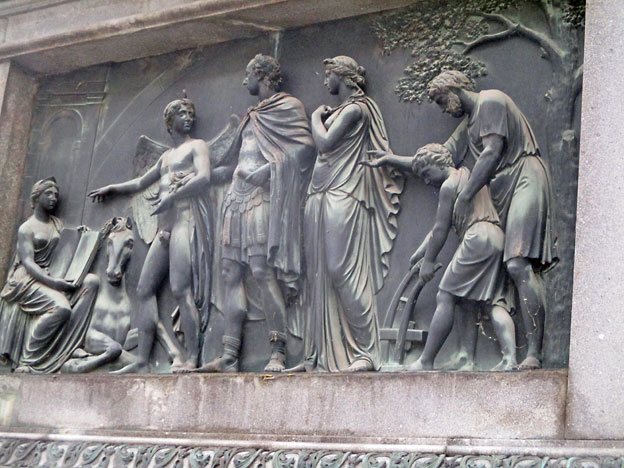
| The
Spanish Riding School is a complex located inside the Hofburg where you can admire the famous Lipizzaner horses and their splendid performances. The Spanish Riding School is a centuries-old institution in Vienna as it was founded in the 16th century with the aim of giving riding lessons to Viennese nobles. The site is located within the large Hofburg complex, the palace that was for centuries the residence of the royal family and the administrative centre of the city. https://www.visitaustria.info/en/vienna /vienna-things-to-do/spanish-riding-school/ (21. desember 2025) |
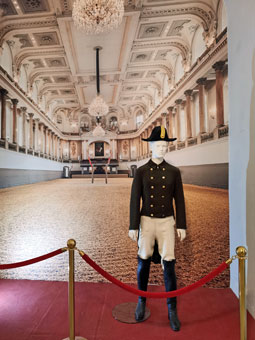 |
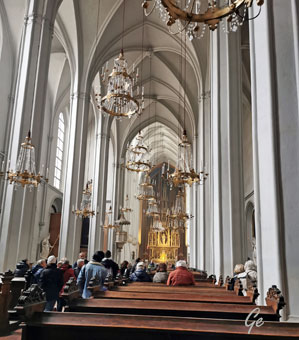 The Augustinian Church (German: Augustinerkirche) in Vienna is a parish church located on Josefsplatz, next to the Hofburg, the winter palace of the Habsburg dynasty in Vienna. Originally built in the 14th century as the parish church of the imperial court of the Habsburgs, the harmonious Gothic interior was added in the 18th century. The official name of church and parish is St. Augustin, but it is locally called Augustinerkirche. Augustinian Church, Vienna -Wikipedia (21. desember 2025) |
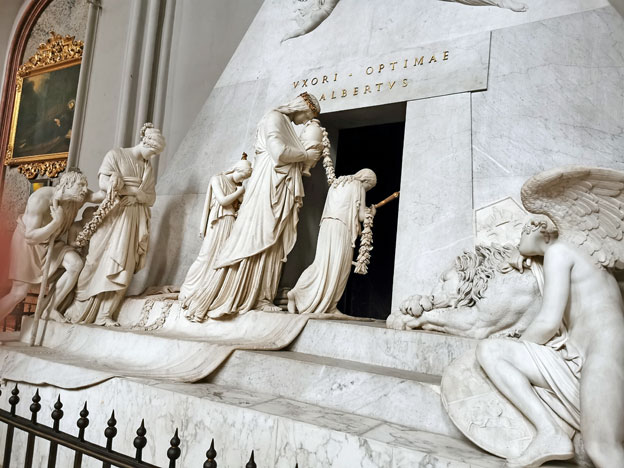 Antonio Canova: Monument to Archduchess Marie Christine, 1800. Erected in the Augustinerkirche in 1805, the memorial toArchduchess Marie Christine, who had died in 1798 and isinterred in the Kapuzinergruft, is regarded as one of themost important monumental sculptures of the Neoclassicalera. It was commissioned by her husband, Duke Albert of Saxony-Teschen, as recorded by the Latin Inscription, "uxorioptimae Albertus" (to the best wife - Albert). Antonio Canova: Monument to Archduchess Marie Christine, 1800 | Die Welt der Habsburger (21. desember 2025) |
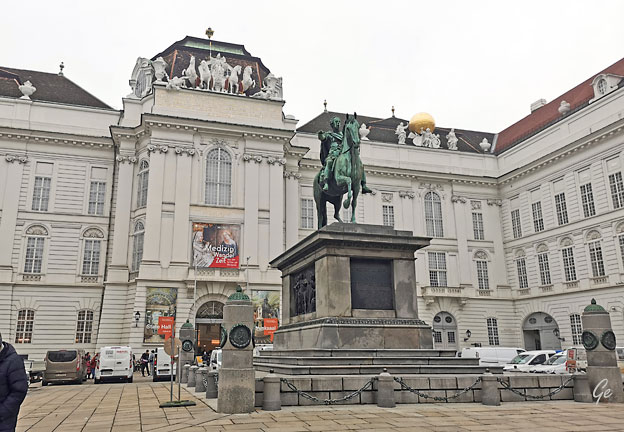
Josefsplatz is centred on a full-sized equestrian statue and monument of Emperor
Joseph II, erected by sculptor Franz Anton von Zauner between 1795 and 1807.
Josefsplatz - Wikipedia (21. desember 2025)
Joseph II (13 March 1741 – 20 February 1790) was Holy Roman Emperor from
18 August 1765 and sole ruler of the Habsburg monarchy from 29 November
1780 until his death.
Joseph II, Holy Roman Emperor - Wikipedia (21. desember 2025)
 |
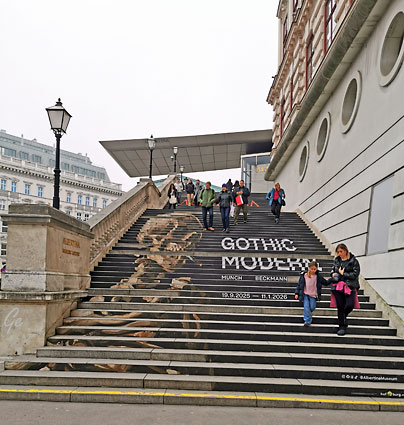 |
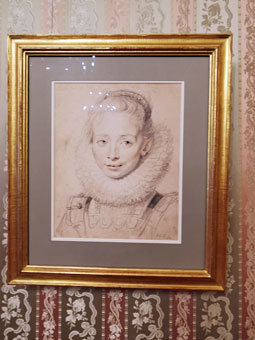
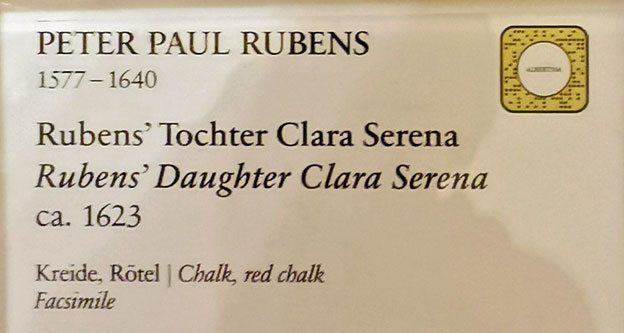
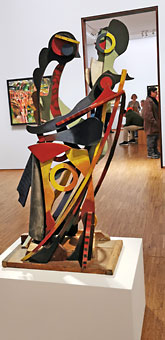
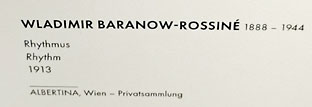
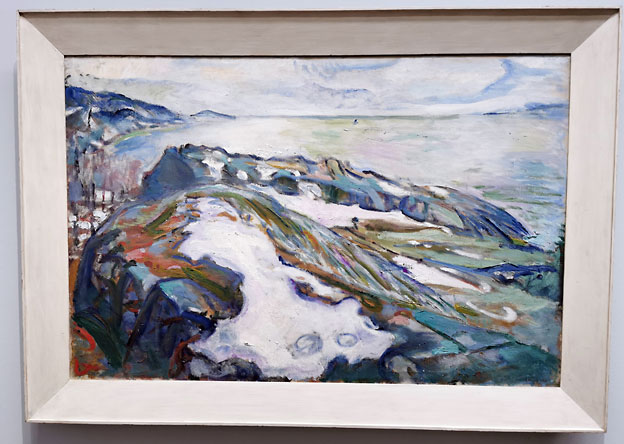
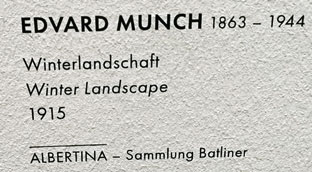
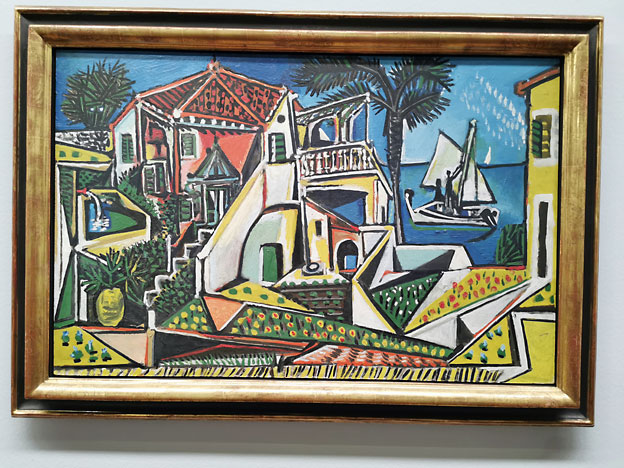
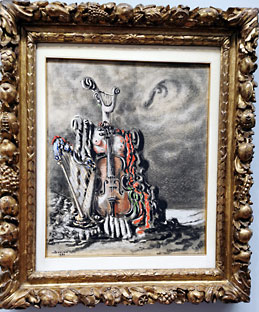
Gothic Modern In its major autumn exhibition, the ALBERTINA Museum has set out to stage a highly charged encounter between modernism and Gothic art. The spotlight here is on masterpieces ranging from symbolism to expressionism that take inspiration from medieval art’s emotional power. GOTHIC MODERN « The ALBERTINA Museum Vienna (21. desember 2025) |
The collection was created by Duke Albert with the Genoese count Giacomo Durazzo,
the Austrian ambassador in Venice. In 1776 the count presented nearly 1,000 pieces
of art to the duke and his wife Maria Christina (Maria Theresa's daughter).
Count Durazzo, who was the brother of Marcello Durazzo, the Doge of Genoa – "wanted
to create a collection for posterity that served higher purposes than all others:
education and the power of morality should distinguish his collection...." In the 1820s Archduke Charles, Duke Albert and Maria Christina's foster son, initiated further modifications to the building by Joseph Kornhäusel, which affected mostly its interior decoration. After Archduke Charles, his son Archduke Albert then Albrecht's nephew the popular Archduke Friedrich, Duke of Teschen lived in the building.
Albertina - Wikipedia (21. desember 2025)
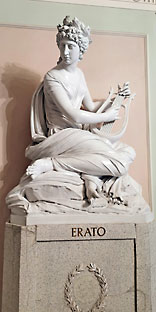 |
In Greek
mythology, Erato (/ˈɛrətoʊ/; Ancient Greek: Ἐρατώ) is one of the Muses, associated with erotic lyric poetry. The name would mean "desired" or "lovely", if derived from the same root as Eros, as Apollonius of Rhodes playfully suggested in the invocation to Erato that begins Book III of his Argonautica Erato - Wikipedia (21. desember 2025 |
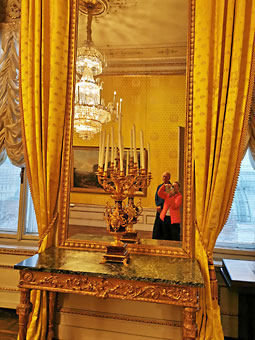
THE STATE ROOMS
Immerse yourself in imperial flair at the ALBERTINA Museum: for around 100 years, the present-day museum building served as the residence of Habsburg archdukes and archduchesses.
 |
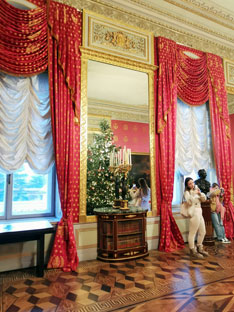 |
restored Habsburg State Rooms that sweep visitors away into the magnificent world
of classicism with their precious wall coverings, chandeliers, fireplaces and stoves, distinctive marquetry, and exquisite furniture.
State Rooms « The ALBERTINA Museum Vienna (21. desember 2021)
 |
 |
 |
 |
 |
 |
 |
 |
 |
 |
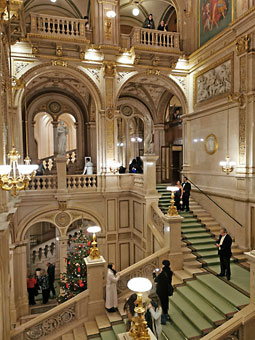 |
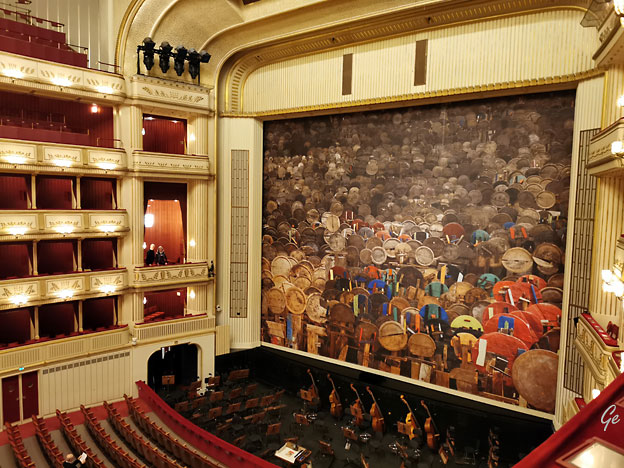
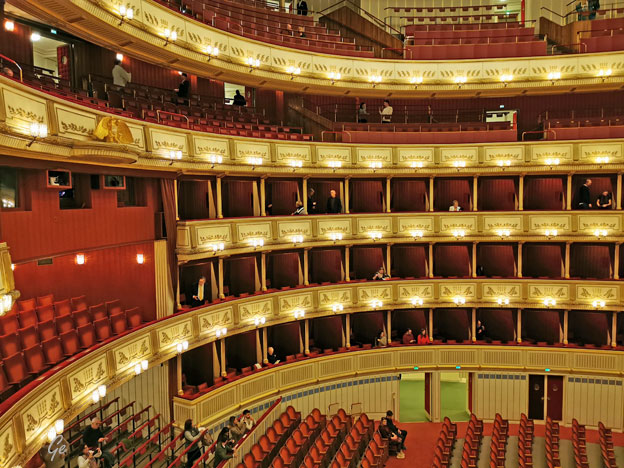
The
opera house was the first major building on the Vienna Ringstrasse commissioned by the Viennese "city expansion fund". Work commenced on the house in 1861 and was completed in 1869, following plans drawn up by architects August Sicard von Sicardsburg and Eduard van der Nüll. It was built in the Neo-Renaissance style by the Czech architect and contractor Josef Hlávka. Vienna State Opera - Wikipedia (21. desember 2025) |
Madama Butterfly (Italian pronunciation: [maˈdaːma ˈbatterflai]; Madame Butterfly) is
an opera in three acts (originally two) by Giacomo Puccini, with an Italian libretto by
Luigi Illica and Giuseppe Giacosa.
It is based on the short story "Madame Butterfly" (1898) by John Luther Long, which in turn
was based on stories told to Long by his sister Jennie Correll and on the semi-autobiographical
1887 French novel Madame Chrysanthème by Pierre Loti. Long's version was dramatized by
David Belasco as the one-act play Madame Butterfly: A Tragedy of Japan, which, after
premiering in New York in 1900, moved to London, where Puccini saw it in the summer of that
year.
Madama Butterfly - Wikipedia (21. desember 2025)
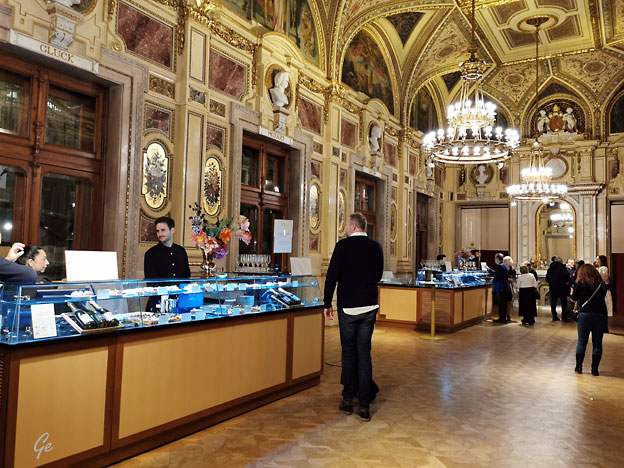
Før forestillingen tok vi et glass vin i restauranten.
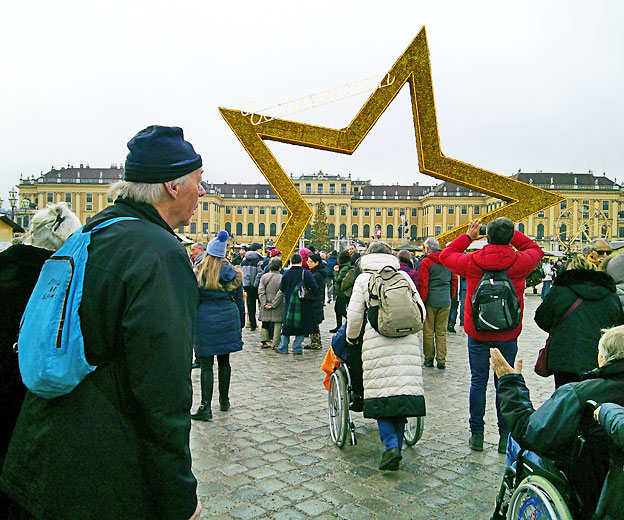
Vi er kommet til Schönbrunn.
Utenfor slottet er det julemarked.
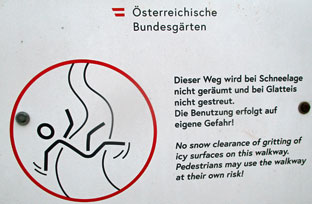
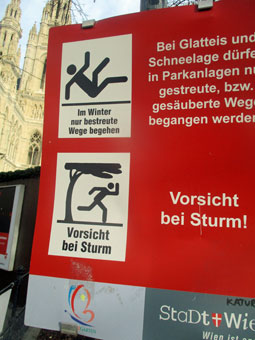
| Gå
forsiktig! |
 |
I 1569 kjøpte den tysk-romerske keiseren Maximilian II Katterburg, som lå på
en stor slette ved Wienelven, som ligger mellom Meidling og Hietzing, der
Schönbrunns parker og bygninger ligger i dag. Den tidligere eieren hadde i 1548
reist et herskapshus kalt Katterburg. Keiseren beordret området inngjerdet og
sette vilt ut som fasaner, ender, hjort og villsvin, for at det skulle tjene som hoffets jaktområde. I en liten egen del av området ble det holdt «eksotiske» fugler som kalkuner og påfugler. Det ble også bygget fiskedammer.
I løpet av det neste århundret ble området brukt for jakt og rekreasjon. Eleonora
Gonzaga, som var gift med Ferdinand II av Det tysk-romerske rike, elsket jakt,
tilbrakte mye tid der og ble testamentert området som enkens bolig etter
ektemannens død i 1637. Fra 1638 til 1643 la hun til et palass til herskapshuset i Katterburg, mens i 1642 kom den første omtalen av navnet Schönbrunn på en
faktura. Opprinnelsen til orangeriet (drivhus som benyttes til overvintring av
sitrustrær og andre eviggrønne planter) ved Schönbrunn ser også ut til å gå
tilbake til Eleonora Gonzaga. Schönbrunn-palasset i sin nåværende form ble
bygget og ombygd i løpet av 1740–1750-årene under keiserinne Maria Theresia
som mottok eiendommen som bryllupsgave. Frans II bestilte ominnredningen av
palassets eksteriør i nyklassisistisk stil slik det ser ut i dag.
Schönbrunn – Wikipedia (22. desember 2025)
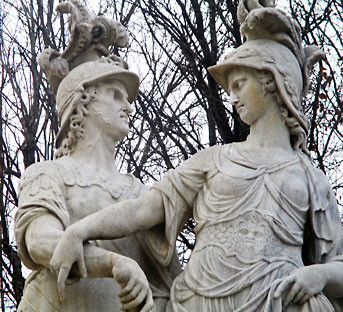 Mars og Minerva, skulptur av Veit Königer |
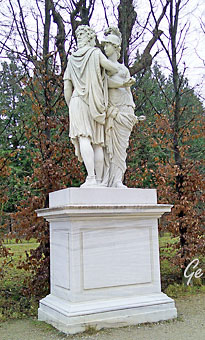 Janus was the god of gates, doorways, and beginnings in the Roman religion. He is often depicted having two faces because he looked to both the past and the future. Janus is shown standing with Bellona, the Roman goddess of war, and according to various accounts the wife or sister of Mars. Skulptur av Johann Wilhelm Beyer Sculptures in the Schönbrunn Garden - Wikipedia (22. desembler 2025) |
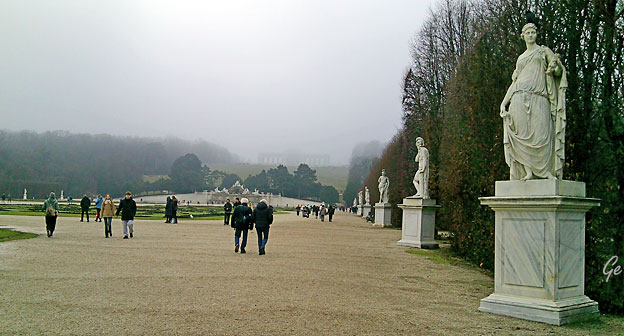
Flora was the goddess of flower and spring, who was first given a temple in 238 BC
near the Cicus Maxinus. Celebrations were held there in her honor every April.
Skulptur av Johann Wilhelm Beyer
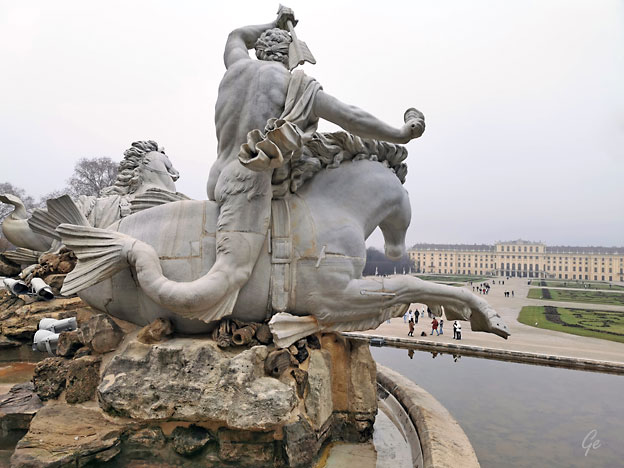
The Neptune Fountain
Appearing at the base of the grotto are four tritons—creatures who are half-man and
half-fish—who are part of the sea-god's entourage. Each holds a conch shell trumpet
with which they can inspire fear. They are restraining the sea-horses who draw
Neptune's chariot across the seas.
Sculptures in the Schönbrunn Garden - Wikipedia (22. desember 2025)
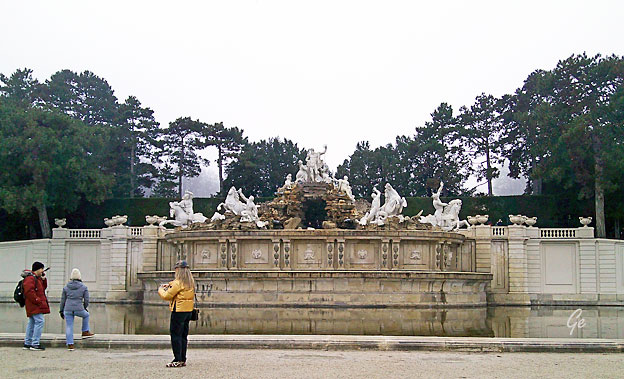
The Neptune Fountain at the foot of the Gloriette hill was designed to be the
crowning monument of the Great Parterre. Commissioned by Empress Maria
Theresa, work on the fountain began in 1776 and was completed within four
years, just prior to the death of the empress. The overall design was done
by Johann Ferdinand Hetzendorf von Hohenberg; the marble sculptural group
was executed by Wilhelm Beyer.
Sculptures in the Schönbrunn Garden - Wikipedia (22. desember 2025)
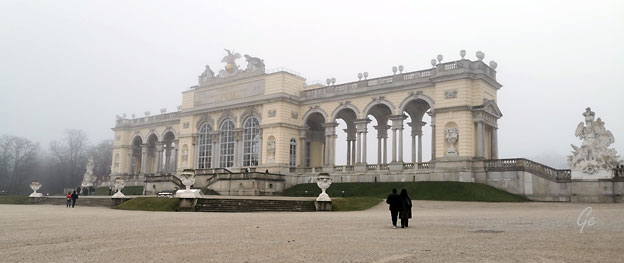
The largest and probably best-known gloriette is in the Schönbrunn Palace garden in
Vienna.
Built in 1775 as the last building constructed in the garden according to the plans of Austrian imperial architect Johann Ferdinand Hetzendorf von Hohenberg as a
"temple of renown" to serve as both a focal point and a lookout point for the garden,
it was used as a dining hall and festival hall as well as a breakfast room for emperor
Franz Joseph I.
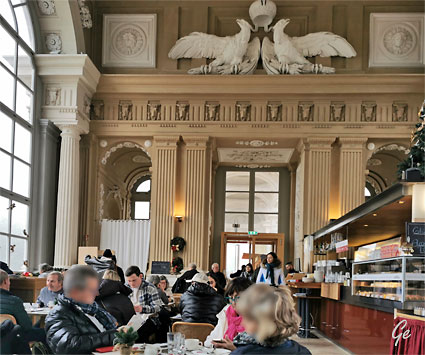
A gloriette (from the 12th-century French gloire meaning "little room") is a building in a garden erected on a site that is elevated with respect to the surroundings. The structural execution and shape can vary greatly, often in the form of a pavilion or tempietto, more or less open on the sides. Gloriette - Wikipedia (22. desember 2025) |
 |
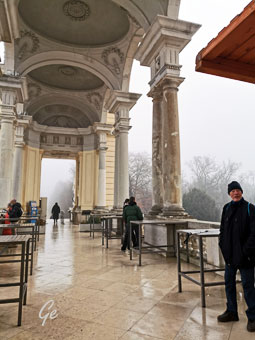 |
The dining hall, which was used until the end of the monarchy, today has a café in it, and on the roof an observation platform overlooks Vienna. The gloriette's decorative sculptures were made by the famous Salzburg sculptor Johann Baptist von Hagenauer. The gloriette was destroyed in the Second World War, but had already been restored by 1947, and was restored again in 1995, when its central part was closed with glass panes and converted to a café. Gloriette - Wikipedia (22. desember 2025) |
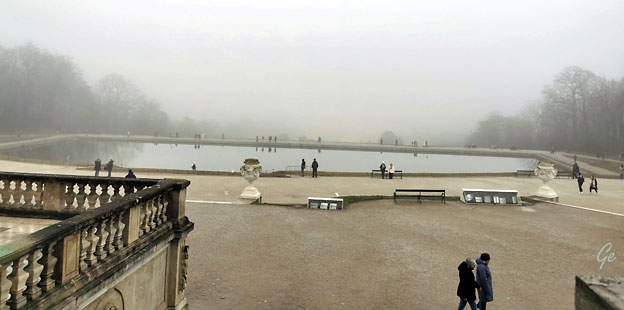
Utsikten var ikke så fin da vi var der. Tåka lå tett.
 |
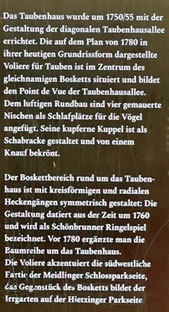 |
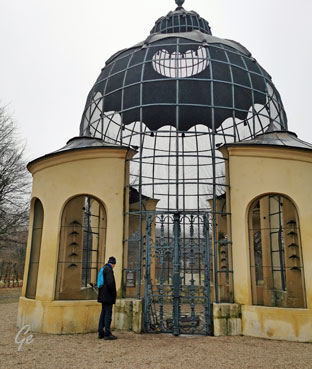
Taubenhaus
The Columbary was erected around 1750/55 when the diagonal
Columbary Avenue was laid out. Depicted on the plan of 1780 in the
groundplane shape it has today, this dove aviary is situated at the
centre of the bosquet or formal grove of the Columbary Avenue.
The airy circular structure har four masonryalcoves which serve as
roosting sites for thebirds. Its copper cupola has the form of a
pelmet and is cowned with a lantern and avase-like structure.
The bosquet around the aviary has a summetrical design dating from
around 1760with circular and radial hedged walks,giving it its popular
name of "the Schönbrunn Merry-Go-Round".
The row og trees around the aviary was added before 1780.
Accentuating the south-western part of the eastern half of the park,
the bosquet has its counterpart in the Maze in the western half
og the park.
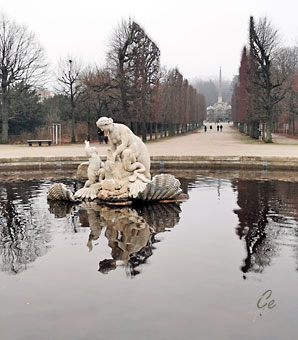 |
Den østlige Najadefontena i Schönbrunn
(spirits of springs and rivers who belonged to the sea-god Neptune’s followers) were created by Wilhelm Beyer. |
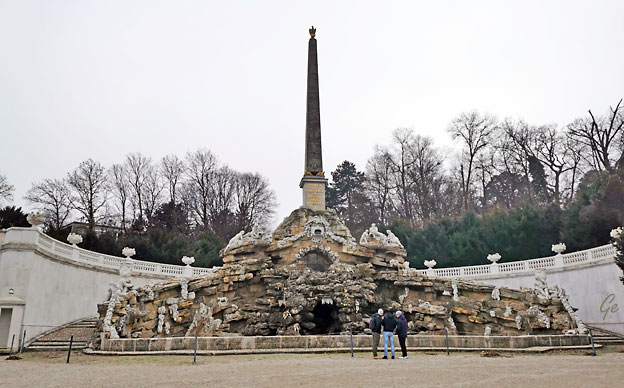
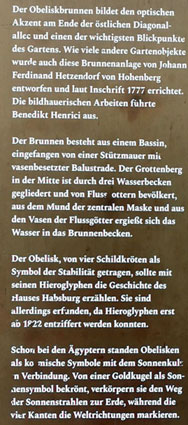
Obelisk-fontena
 |
Der
Obeliskbrunnen One og the important focal points in the gardens, the Obelisk Fountain forms the visual accent at the end of the eastern diagonal avenue. Erected according to its inscription in 1777. Like many other features in the gardens this fountain was designed by Johann Ferdinand Hetzendorf von Hohenberg. The sculptural elements were executed by Benedikt Henrici. The fountainconsist of a basin curbed by a wall with a balustrade decked with vases. The grotto mound at its centre is aticulated by three water basins and peoples with river gods. The water flows into the pool of the foutain through the mouth of the central mask and the vases held by the river gods. Borne on the backs of four turtles as a symbol of stability, the obelisk is carved with hieroglyphs purporting to tell the history of the House of Habsburg. |
In ancient Egypt obelisks were co mic symbols associated with the worship of
the sun, they embody the path of the rays of the sun to the Eart, while the four
angles mark the cardinal directions
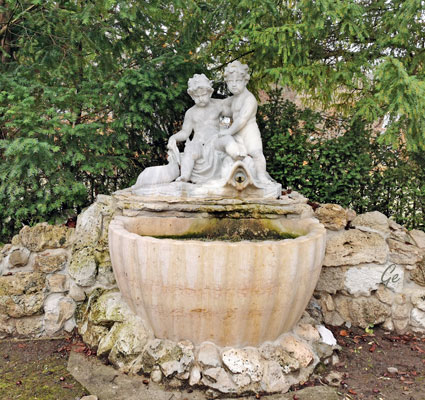 Engel-fontana |
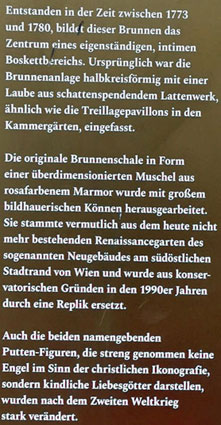 |
Erected in the period between 1773 and 1780, this fountain stands
at the centre of a separate bosquet or formal grove with its own
seluded atmosphere. Origially the fountai was semicircular and
bordered by a shady pergola similar to the trelliswork pavilions in the
Privy Gardens.
The original fountain basinof pink marble in the form of a huge shell was
sculpted with consummate skill. It probably came from the no longer
extant Renaissance garden of the Neugebäude palace on the south-
eastern outskirts of Vienna, and was replaced with a replica for reasons
of conservation in the 1990s.
The two putto figures who give the fountain its name are strictly spaking
not angels in the tradition of Christianiconography but represent childlike
love deities. They were modified extensively after the Second World War.
 |
 |
| The
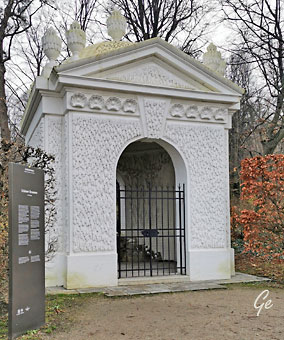
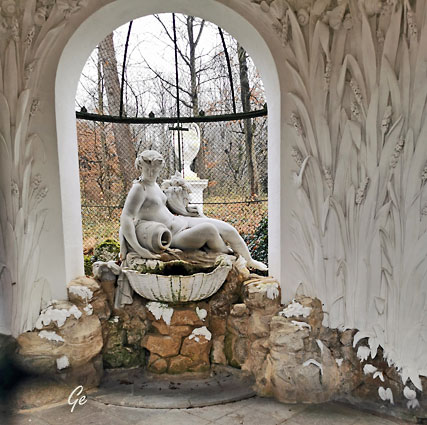
well house in the form of a pavilion was built to designs by the architect Isidor Ganneval in 1771. The facade is covered in a stalactite- like surface while the architrave is decorated with chells. To the front and rear of the building are open semicircular arches. Framed in the back arch is the figure of Egeria as the guardian nymph of the spring. Sculpted by Wilhelm Beyer, and one of this artists most graceful creations, she holds a vase from which the spring water flows into the basin. |
Until
the construction of the Viennese mountain spring water supply at the end of the nineteenth centyry, the water from the Fair Sprin served as drinking water for the imperial family and court. Until the 1980s visitors to the garden could pay a small sum to sample this delicious water  |
 |
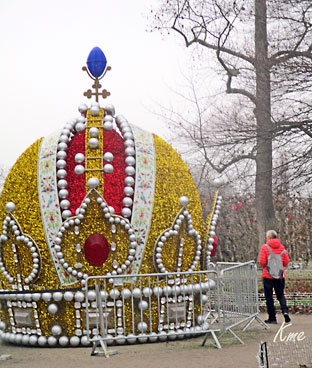 |
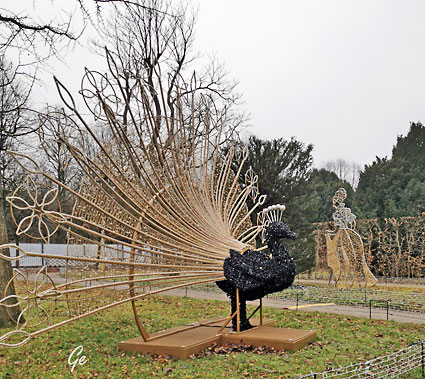
Bilder fra parken ved Schöbrunnslottet
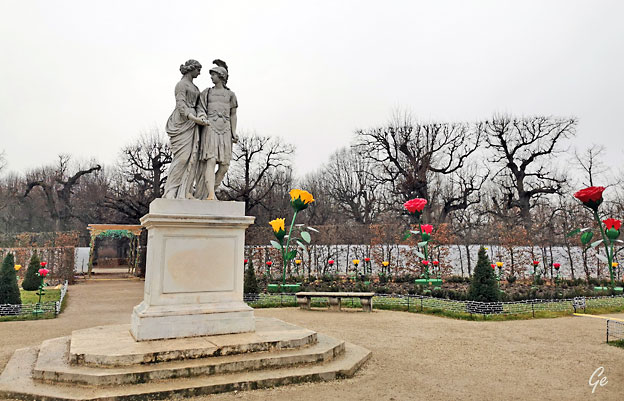
Alexander den store og Olympia
Skulptur av Johann Wilhelm Beyer
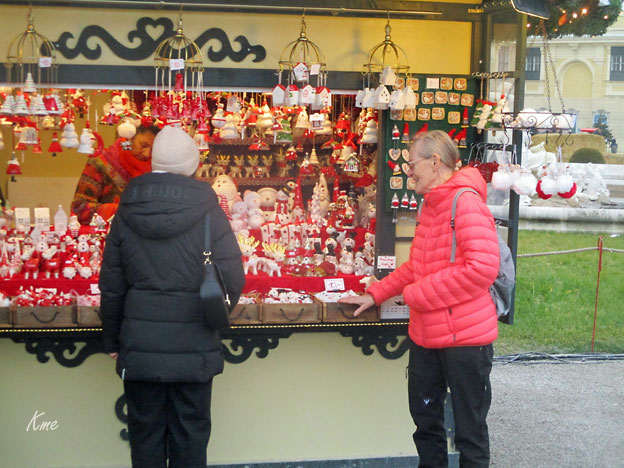
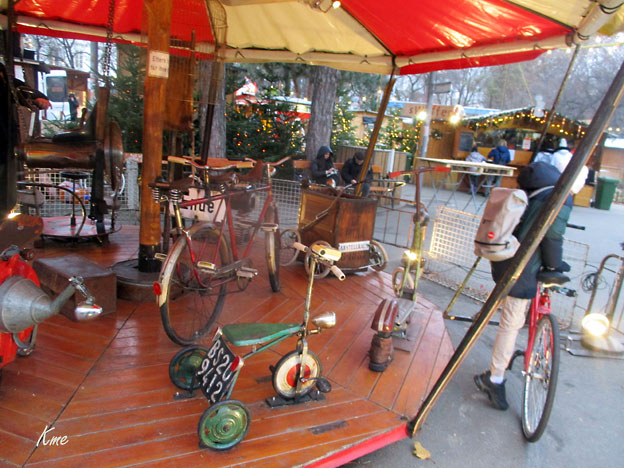
Før vi dro tilbake til xentrum, gikk vi en runde på julemarkedet-
| Da vi
gikk av t-banen på Karls Platz kom vi rett til enda et julemarked, julemarkedet i Ressels park. |
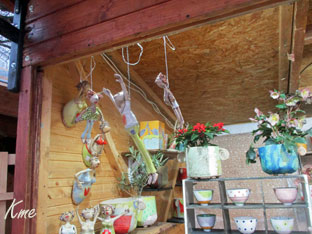 |
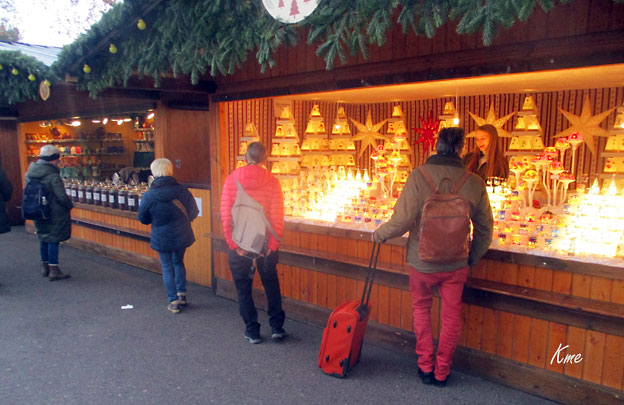
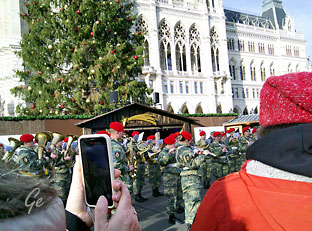
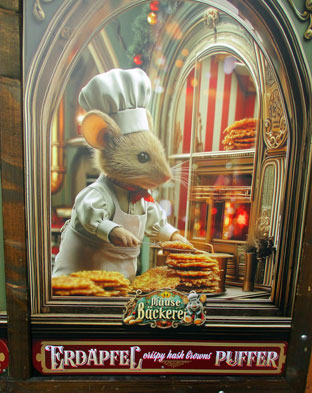
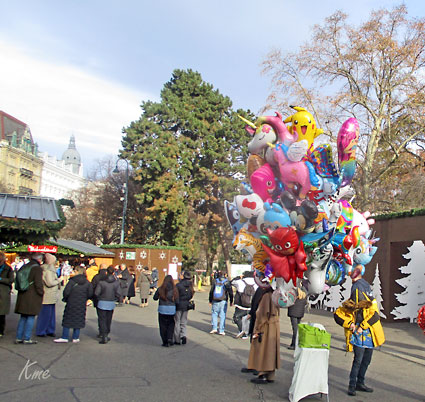
The Christmas Market at Karlsplatz is a nice one, with great toilet facilities
(quite seldom thing) and place where you can big crepes, gluhwein, clothes
and other nice things. There is also an area for children to play on, and yet
another Christmas Market with great atmosphere.
Christmas Market at Karlsplatz - Vienna Guide (22. desember 2025)
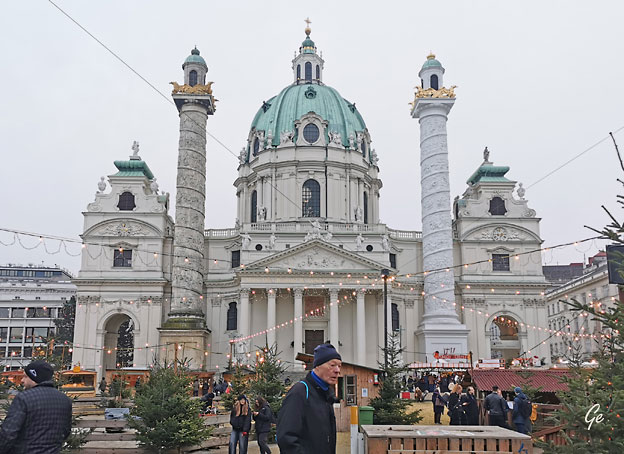
The Karlskirche (English: Charles Church) is a Baroque church in the
Karlsplatz in Vienna, Austria. The church is dedicated to Saint Charles
Borromeo, a leading figure of the Counter-Reformation. The church is
located on the border of Wieden and the Innere Stadt, the city centre.
In 1713, one year after the last major plague epidemic in Vienna,
Charles VI, Holy Roman Emperor, pledged to build a church dedicated to
his namesake patron saint, Charles Borromeo, who was revered as a
healer for plague sufferers. An architectural competition was announced,
in which Johann Bernhard Fischer von Erlach won over competitors
including Ferdinando Galli-Bibiena and Johann Lukas von Hildebrandt.
Construction began in 1716 under the supervision of Anton Erhard
Martinelli. After J.B. Fischer's death in 1723, his son, Joseph Emanuel
Fischer von Erlach, completed the construction in 1737 with
modifications to the original plans. The church originally possessed a
direct line of sight to the Hofburg and was also, until 1918, the imperial
patron parish church.
Karlskirche - Wikipedia (22. desember 2025)
| tekst |
 |
 |
 |
 |
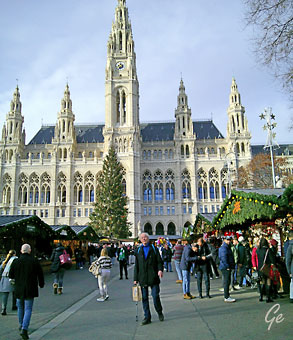
The
Christmas Market at Rathausplatz is probably the
most famous, and the most popular market
in Vienna. During evenings it is so packed, that you can hardly move because of the crowd. The lights are magnificent on the Rathaus, and they have very nice “Christmas Market cups.” You haven’t been to Vienna if you haven’t seen this! Christmas Market at Rathausplatz - Vienna Guide (22. desember 2025) |
 |
Rat Haus By 1850, Vienna's rapid expansion, driven by the integration of nearby suburbs, made the Altes Rathaus on Wipplingerstraße inadequate. With the demolition of city walls between 1858 and 1865 to build the Ringstraße, a competition for a new city hall was held in 1868. German architect Friedrich von Schmidt won the commission, and the new building was planned for the Ringstraße, alongside other major constructions like the Vienna State Opera ( 1869), the Parliament Building (1883), the University of Vienna's main building (1884), and the Burgtheater (1888). Vienna City Hall - Wikipedia (22. desember 2025) |
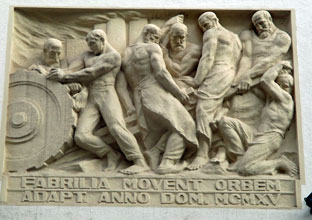 |
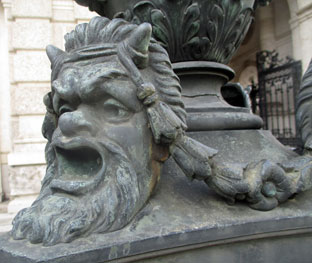 |
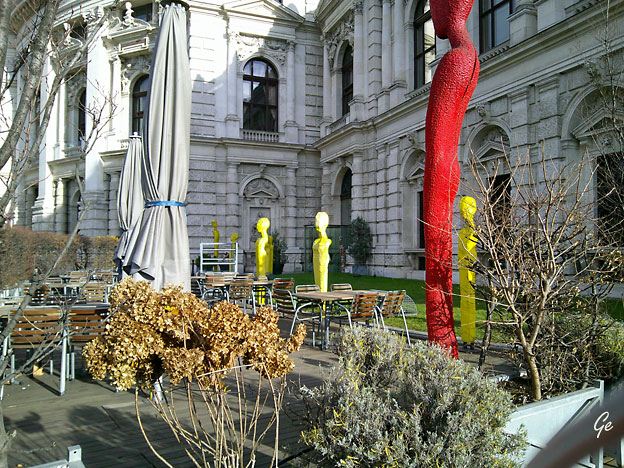
Cafe ved Burgtheater
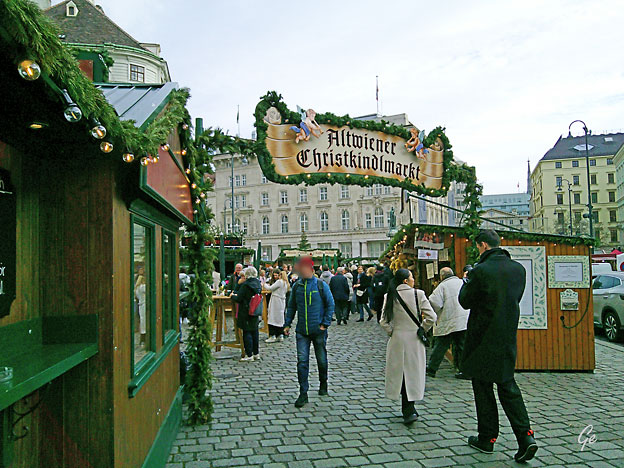
Der erste Weihnachtsmarkt hat im Jahr 1722 auf der Freyung stattgefunden – damals
noch unter dem Namen „Nikolo-, Weihnachts- und Krippenmarkt". Die über 100 Stände wurden später um 1840 auf den Platz am Hof verlegt, um Konflikten mit dem regulären Marktbetrieb auf der Freyung entgegenzuwirken. Während die klassischen „Jahrmärkte“ aus der modernen Großstadt vertrieben wurden, etablierte sich der Weihnachtsmarkt
im 19. Jahrhundert unter der Bezeichnung „Christkindlmarkt“.
Geschichte der Wiener Christkindlmärkte (22. desember 2025)
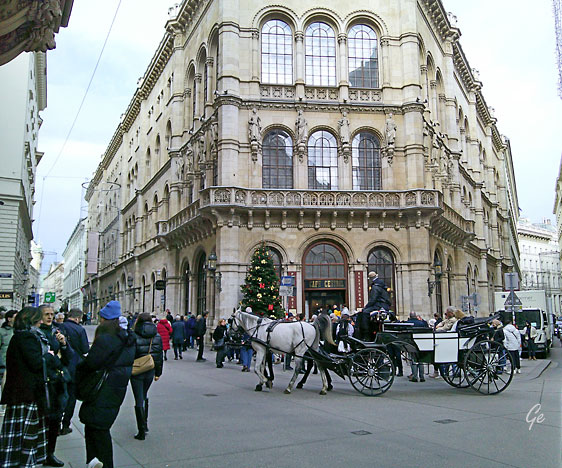
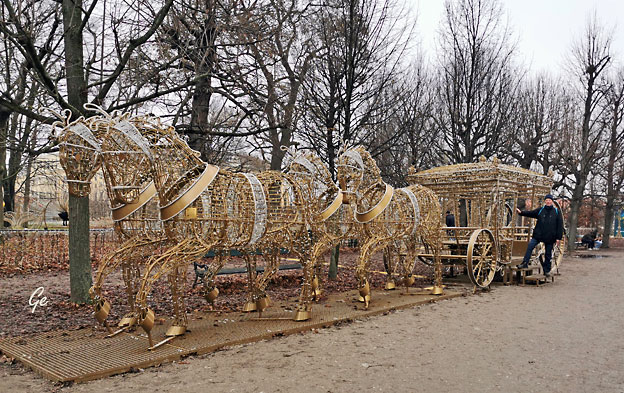
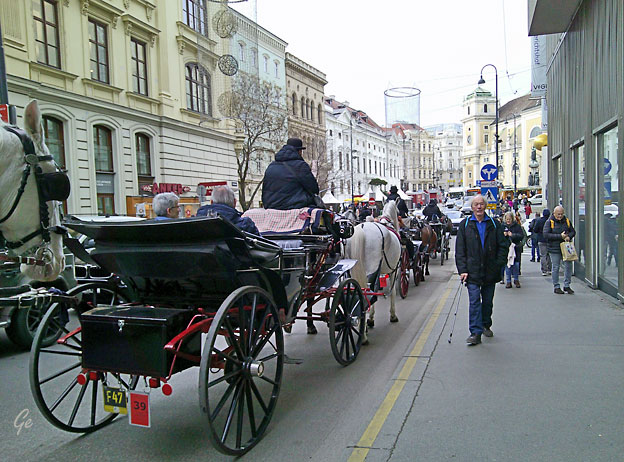
Hestevogn utenfor Cafe Central
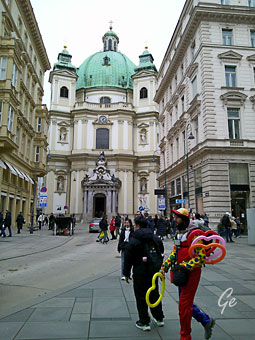 |
The Peterskirche
(English: St. Peter's Church) is a Baroque Roman Catholic parish church in Vienna, Austria. It was transferred in 1970 by the Archbishop of Vienna Franz Cardinal König to the priests of the Opus Dei. Peterskirche, Vienna - Wikipedia (22. desember 2025) |
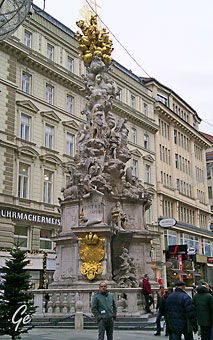
The Plague Column (German: die Wiener Pestsäule), or Trinity Column
(German: Dreifaltigkeitssäule), is a Holy Trinity column located on the Graben, a street in
the inner city of Vienna, Austria. Erected after the Great Plague epidemic in 1679, the Baroque memorial is one of the best known and most prominent sculptural artworks
in the city. Christine M. Boeckl, author of Images of Plague and Pestilence, calls it "one of
the most ambitious and innovative sculptural ensembles created anywhere in Europe in
the post-Bernini era.
Plague Column, Vienna - Wikipedia (22. desember 2025)
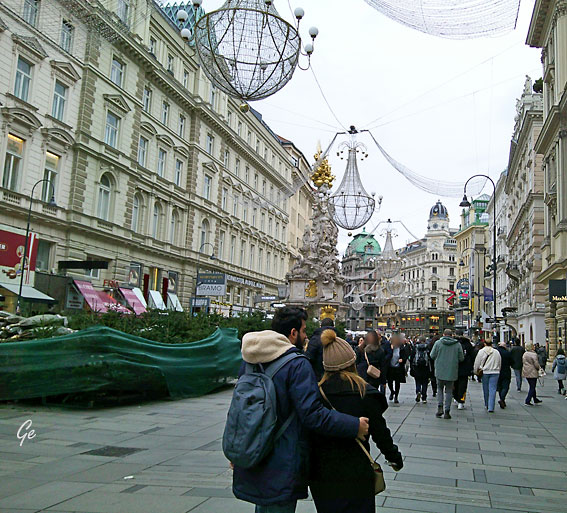
Gågate med Pestsøyla
 |
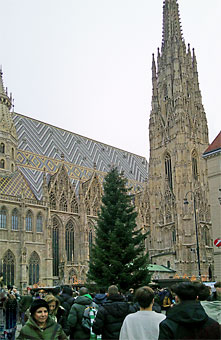 Stephansdomen |
Vienna, Austria, and the mother church of the Archdiocese of Vienna. It is the seat of the
Archbishop of Vienna, Christoph Schönborn.
The current Romanesque and Gothic form of the cathedral, seen today in the Stephansplatz,
was largely initiated by Duke Rudolf IV (1339–1365) and stands on the ruins of two earlier
churches, the first a parish church consecrated in 1147. The most important religious
building in Vienna, St. Stephen's Cathedral has borne witness to many important events in
Habsburg and Austrian history and has, with its multi-coloured tile roof, become one of the
city's most recognizable symbols. It has 256 stairs from the top to the bottom.
St. Stephen's Cathedral, Vienna - Wikipedia (22. desember 2025)
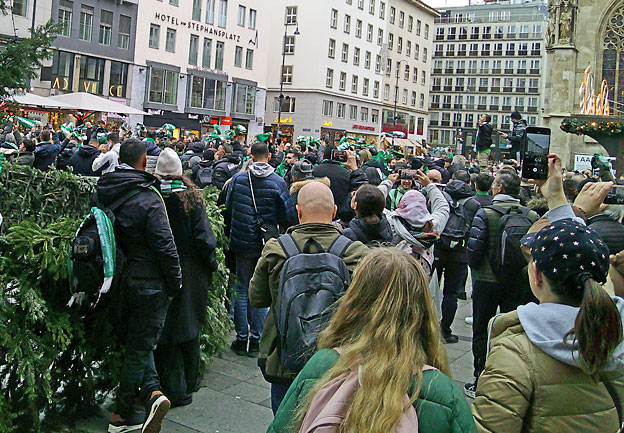
Det skulle være fotballkamp om kvelden.
Rapid Wien mot Omonia Nicosia, UEFA Conference Leage.
De grønnkledde fra Nicosia var godt synlige i byen denne dagen,
og ikke minst om kvelden, De vant 1-0.
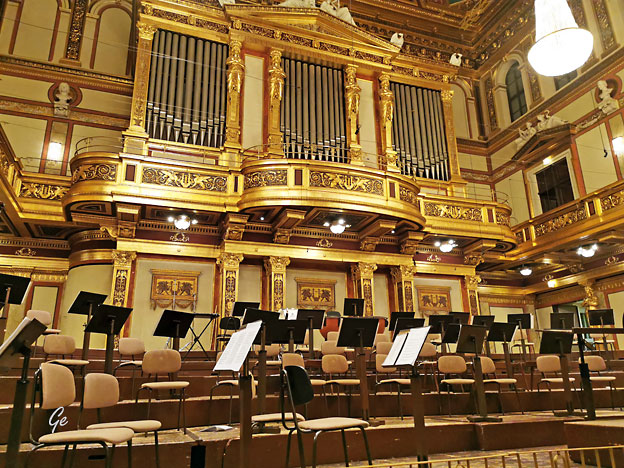
Om kvelden var vi på konsert i the Wiener Musikverein
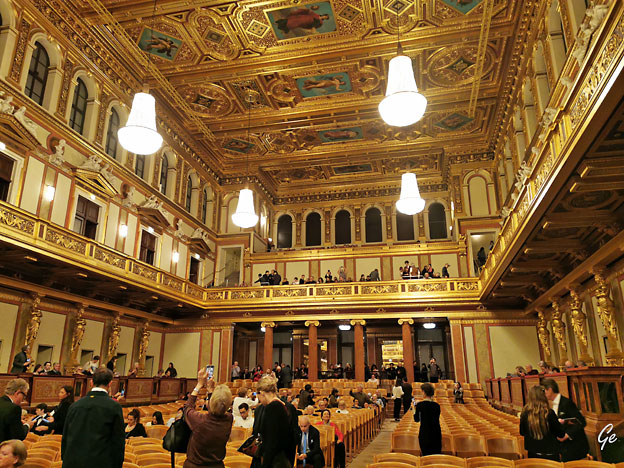
The Wiener Musikverein, German for 'Viennese Music Association'), commonly
shortened to Musikverein, is a concert hall in Vienna, Austria, which is located in the Innere Stadt district. The building opened in 1870 and is the home of the
Vienna Philharmonic orchestra.
The acoustics of the building's 'Great Hall' (Großer Saal) have earned it recognition alongside other prominent concert halls, such as the Konzerthaus in Berlin, the Concertgebouw in Amsterdam and Symphony Hall in Boston.
With the exception of Boston's Symphony Hall, none of these halls was built in the modern era with the application of architectural acoustics, and all share a long, tall
and narrow shoebox shape.
Musikverein - Wikipedia (22. desember 2025)
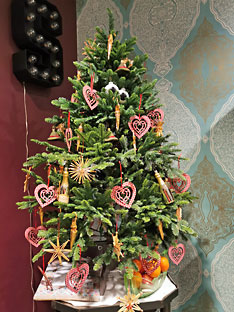 Juletreet på hotellet, pyntet med champagneflasker og hjerter |
Så var det slutt på førjulsferien for i år. T-bane, tog og fly hjem til Norge, og videre med fly og båt. |
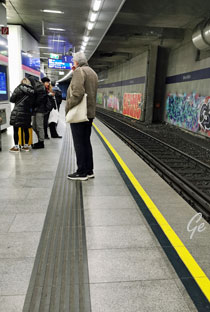 |
Vi
venter på tog til flyplassen i Wien. Flyet var heldigvis helt i rute denne gangen- |